Tag Archives: blood testing

Selenium: How Much Is Optimal For Health?

For those who track their diet, eating only the RDA for many nutrients may not optimize health. For example, the RDA for selenium is 55 micrograms per day, but is that amount optimal for reducing risk of death for all causes?

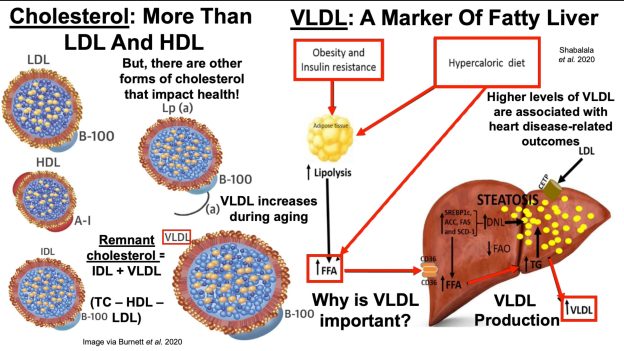
VLDL Increases During Aging, And Is Associated With Adverse Cardiovascular Outcomes

Papers referenced in the video:

Remnant Cholesterol and Atherosclerotic Cardiovascular Disease Risk: https://www.jacc.org/doi/10.1016/j.ja…

The effect of adiponectin in the pathogenesis of non-alcoholic fatty liver disease (NAFLD) and the potential role of polyphenols in the modulation of adiponectin signaling: https://www.sciencedirect.com/science…

Joint distribution of lipoprotein cholesterol classes. The Framingham study: https://pubmed.ncbi.nlm.nih.gov/6573877/

Long-term coronary heart disease risk associated with very-low-density lipoprotein cholesterol in Chinese: the results of a 15-Year Chinese Multi-Provincial Cohort Study (CMCS): https://pubmed.ncbi.nlm.nih.gov/20223…

Remnant Cholesterol, Not LDL Cholesterol, Is Associated With Incident Cardiovascular Disease: https://pubmed.ncbi.nlm.nih.gov/33272…

Remnant cholesterol and coronary atherosclerotic plaque burden assessed by computed tomography coronary angiography: https://pubmed.ncbi.nlm.nih.gov/30870…

Premature myocardial infarction is strongly associated with increased levels of remnant cholesterol: https://pubmed.ncbi.nlm.nih.gov/26687…

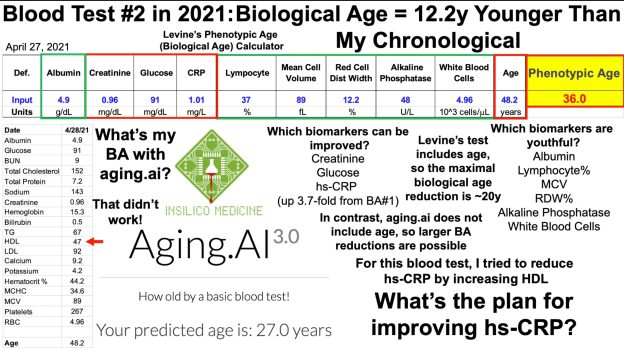
Quantifying Biological Age: Blood Test #2 in 2021

Paper references for Levine’s Phenotypic Age calculator and aging.ai:

An epigenetic biomarker of aging for lifespan and healthspan: https://pubmed.ncbi.nlm.nih.gov/29676…

Population Specific Biomarkers of Human Aging: A Big Data Study Using South Korean, Canadian, and Eastern European Patient Populations:

https://pubmed.ncbi.nlm.nih.gov/29340…

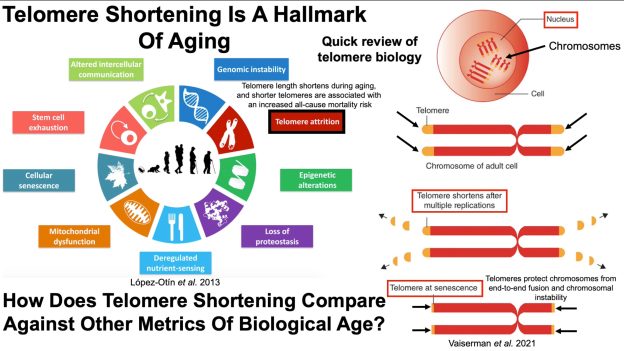
Telomere Length: How Does it Compare Against Other Biological Age Metrics?

Papers referenced in the video:

The Hallmarks of Aging: https://www.ncbi.nlm.nih.gov/pmc/arti…

Telomere Length as a Marker of Biological Age: State-of-the-Art, Open Issues, and Future Perspectives: https://www.ncbi.nlm.nih.gov/pmc/arti…

Telomeres and the natural lifespan limit in humans: https://www.ncbi.nlm.nih.gov/pmc/arti…

Telomere Length and All-Cause Mortality: A Meta-analysis: https://pubmed.ncbi.nlm.nih.gov/30254…

Comparability of biological aging measures in the National Health and Nutrition Examination Study, 1999-2002: https://pubmed.ncbi.nlm.nih.gov/30999…

Longitudinal trajectories, correlations and mortality associations of nine biological ages across 20-years follow-up: https://elifesciences.org/articles/51507

Eleven Telomere, Epigenetic Clock, and Biomarker-Composite Quantifications of Biological Aging: Do They Measure the Same Thing? https://pubmed.ncbi.nlm.nih.gov/29149…

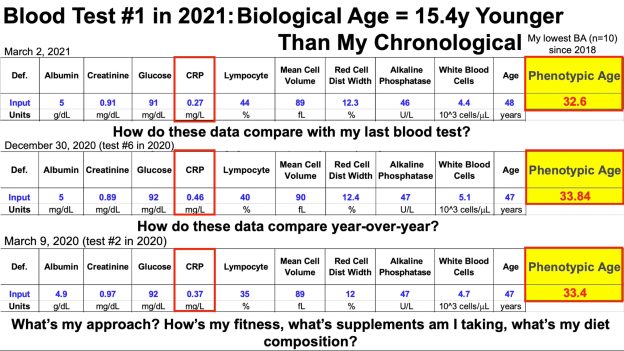
Quantifying Biological Age: Blood Test #1 in 2021

Results for my first blood test in 2021 are in-what’s my biological age, and how am I optimizing it?

If you’re interested in calculating your biological age, the spreadsheet is included as an Excel file in this link:

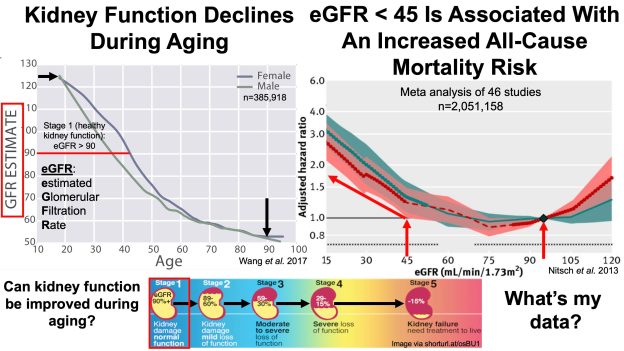
Kidney Function Declines During Aging-Can It Be Reversed?

Discussed in the video:

Data for changes in kidney function during aging, kidney function values that are associated with an increased risk of death for all causes

What’s my data for kidney function, 2006 – 2020?

Can diet impact kidney function?

Within my data, which foods are correlated with good kidney function?

How are the individual components of these foods (fiber, protein, omega-3 fatty acids) correlated with kidney function?

LDL Cholesterol: What’s Optimal For Health And Longevity?

LDL is arguably the most debated biomarker in terms of what’s optimal for health. In the video, I present data showing that 100 – 140, not 50 – 70 mg/dL may be optimal in terms of minimizing disease risk and maximizing longevity.