Tag Archives: health

BMI: What’s Optimal For Longevity?

Is there a BMI that is associated with maximally reduced risk of death from all causes? Let’s have a look at the data!

In a meta-analysis of 19 studies that included 1,460,000 adults (median age, 58 years) a BMI between 20-25 kg/m2 was associated with maximally reduced all-cause mortality risk (Berrington de Gonzalez et al. 2010):

both gend nonsmok bmi mort

However, in a meta-analysis of 32 studies that included 197,140 older adults (65 years+), a BMI between 24 and 31 kg/m2 was associated with maximally reduced all-cause mortality risk (Winter et al. 2014). More specifically, a BMI between 26-26.9 kg/m2 was associated with maximally reduced all-cause mortality risk for never-smokers (Winter et al. 2014):

acm 65

So what’s optimal for longevity in terms of BMI, is it 20-25 kg/m2, or potentially higher, as reported in older adults? For additional insight about the association between BMI with all-cause mortality, I looked up the published BMI data for centenarians:

bmi cent

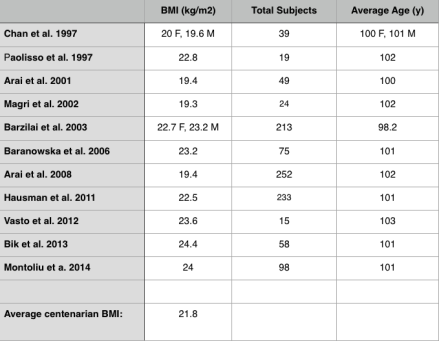
In these 11 studies that included 1075 centenarians, the BMI range was between 19.3-24.4 kg/m2, with an average BMI of 21.8. Shouldn’t that be the BMI reference range for those interested in living past 100?

If you’re interested, please have a look at my book!


References

Arai Y, Hirose N, Yamamura K, Shimizu K, Takayama M, Ebihara Y, Osono Y. Serum insulin-like growth factor-1 in centenarians: implications of IGF-1 as a rapid turnover protein. J Gerontol A Biol Sci Med Sci. 2001 Feb;56(2):M79-82.

Arai Y, Takayama M, Gondo Y, Inagaki H, Yamamura K, Nakazawa S, Kojima T, Ebihara Y, Shimizu K, Masui Y, Kitagawa K, Takebayashi T, Hirose N. Adipose endocrine function, insulin-like growth factor-1 axis, and exceptional survival beyond 100 years of age. J Gerontol A Biol Sci Med Sci. 2008 Nov;63(11):1209-18.

Baranowska B, Bik W, Baranowska-Bik A, Wolinska-Witort E, Szybinska A, Martynska L, Chmielowska M. Neuroendocrine control of metabolic homeostasis in Polish centenarians. J Physiol Pharmacol. 2006 Nov;57 Suppl 6:55-61.

Barzilai N, Atzmon G, Schechter C, Schaefer EJ, Cupples AL, Lipton R, Cheng S, Shuldiner AR. Unique lipoprotein phenotype and genotype associated with exceptional longevity. JAMA 2003;290:2030–40.

Berrington de Gonzalez A, Hartge P, Cerhan JR, Flint AJ, Hannan L, MacInnis RJ, Moore SC, Tobias GS, Anton-Culver H, Freeman LB, Beeson WL, Clipp SL, English DR, Folsom AR, Freedman DM, Giles G, Hakansson N, Henderson KD, Hoffman-Bolton J, Hoppin JA, Koenig KL, Lee IM, Linet MS, Park Y, Pocobelli G, Schatzkin A, Sesso HD, Weiderpass E, Willcox BJ, Wolk A, Zeleniuch-Jacquotte A, Willett WC, Thun MJ. Body-mass index and mortality among 1.46 million white adults. N Engl J Med. 2010 Dec 2;363(23):2211-9. doi: 10.1056/NEJMoa1000367. Erratum in: N Engl J Med. 2011 Sep 1;365(9):869.

Bik W, Baranowska-Bik A, Wolinska-Witort E, Kalisz M, Broczek K, Mossakowska M, Baranowska B. Assessment of adiponectin and its isoforms in Polish centenarians. Exp Gerontol. 2013 Apr;48(4):401-7.

Chan YC, Suzuki M, Yamamoto S. Dietary, anthropometric, hematological and biochemical assessment of the nutritional status of centenarians and elderly people in Okinawa, Japan. J Am Coll Nutr. 1997 Jun;16(3):229-35.

Hausman DB, Johnson MA, Davey A, Poon LW. Body mass index is associated with dietary patterns and health conditions in georgia centenarians. J Aging Res. 2011;2011:138015.

Magri F, Muzzoni B, Cravello L, Fioravanti M, Busconi L, Camozzi D, Vignati G, Ferrari E. Thyroid function in physiological aging and in centenarians: possible relationships with some nutritional markers. Metabolism. 2002 Jan;51(1):105-9.

Montoliu I, Scherer M, Beguelin F, DaSilva L, Mari D, Salvioli S, Martin FP, Capri M, Bucci L, Ostan R, Garagnani P, Monti D, Biagi E, Brigidi P, Kussmann M, Rezzi S, Franceschi C, Collino S. Serum profiling of healthy aging identifies phospho- and sphingolipid species as markers of human longevity. Aging (Albany NY). 2014 Jan;6(1):9-25.

Paolisso G, Ammendola S, Del Buono A, Gambardella A, Riondino M, Tagliamonte MR, Rizzo MR, Carella C, Varricchio M. Serum levels of insulin-like growth factor-I (IGF-I) and IGF-binding protein-3 in healthy centenarians: relationship with plasma leptin and lipid concentrations, insulin action, and cognitive function. J Clin Endocrinol Metab. 1997 Jul;82(7):2204-9.

Vasto S, Scapagnini G, Rizzo C, Monastero R, Marchese A, Caruso C. Mediterranean diet and longevity in Sicily: survey in a Sicani Mountains population. Rejuvenation Res. 2012 Apr;15(2):184-8.

Winter JE, MacInnis RJ, Wattanapenpaiboon N, Nowson CA. BMI and all-cause mortality in older adults: a meta-analysisAm J Clin Nutr. 2014 Apr;99(4):875-90.

Leucine inhibits myostatin-which foods are rich in leucine?

In a previous article I wrote about the effect of epicatechin on reducing myostatin, which may increase muscle mass (https://atomic-temporary-71218033.wpcomstaging.com/2015/02/02/inhibit-myostatin-with-chocolate-increase-muscle-mass/). Are there any other ways to inhibit myostatin with the goal of increasing muscle mass?

10 grams of essential amino acids have been shown to reduce myostatin levels in skeletal muscle (Drummond et al. 2009). Because essential amino acids are found in high amounts in animal protein-containing foods, the answer to decrease myostatin would be to eat more protein, right?

Not so fast, because high protein diets (~20% of total calories), especially from animal sources are associated with an increased all-cause mortality risk in people younger than 65 years when compared with those eating a low protein diet (~10% of total calories; Levine et al. 2014). Fortunately, it isn’t just a bolus of essential amino acids that inhibits myostatin. Addition of the essential amino acid leucine to muscle cells inhibits myostatin expression, causing them to grow (Chen et al. 2013). If your goal is to maximize muscle mass but also, optimal health, what daily intake of leucine should you aim for while keeping your total protein intake low?

It has been reported that a leucine intake of 45 mg/kg/day (or more) may be required by athletes to maximize muscle protein synthesis (Mero 1999). For a 70 kg person, this translates into 3.15g of leucine per day (45 mg*70kg=3150mg, = 3.15g). Shown below is my 7-day average (5/21/2015-5/28/2015) protein intake. From the chart, my average daily leucine intake is 3.2 g. However, the nutrient tracking software that I use for some reason includes the total protein amount from my daily can of sardines but not its constituent amino acids. I used ndb.nal.usda.gov to get that info: 1 can of sardines has 1.6 g of leucine. In total, my daily leucine intake is 4.8 g/day. My body weight is currently at 69.1 kgs. These values put me at 70 mg leucine/kg body weight/day (70 * 69.1kg = 4837 mg, = 4.8 g), which is well above the 45 mg/kg/day value above.

leu

So which foods are rich in leucine? Below I’ve ranked foods based on their leucine content (in grams) divided by total calories. Egg whites and cod fish are the all-stars for leucine content per calorie. Chicken and beef are relatively good sources of leucine. Although spinach is better than skim milk when comparing its leucine/calorie content, none of the vegetables or beans come close to the leucine/calorie content found in egg whites or cod fish.

leucine calorie

If you’re interested, please have a look at my book!

References:

Chen X, Huang Z, Chen D, Yang T, Liu G.MicroRNA-27a is induced by leucine and contributes to leucine-induced proliferation promotion in C2C12 cells. Int J Mol Sci. 2013 Jul 8;14(7):14076-84.

Drummond MJ, Glynn EL, Fry CS, Dhanani S, Volpi E, Rasmussen BB. Essential amino acids increase microRNA-499, -208b, and -23a and downregulate myostatin and myocyte enhancer factor 2C mRNA expression in human skeletal muscle. J Nutr. 2009 Dec;139(12):2279-84.

Levine ME, Suarez JA, Brandhorst S, Balasubramanian P, Cheng CW, Madia F, Fontana L, Mirisola MG, Guevara-Aguirre J, Wan J, Passarino G, Kennedy BK, Wei M, Cohen P, Crimmins EM, Longo VD. Low protein intake is associated with a major reduction in IGF-1, cancer, and overall mortality in the 65 and younger but not older population. Cell Metab. 2014 Mar 4;19(3):407-17.

Mero A. Leucine supplementation and intensive training. Sports Med. 1999 Jun;27(6):347-58

Is Dietary Fiber Associated with Reduced Mortality?

In an earlier I post I hypothesized that gut bacteria may be involved in mechanisms that affect lifespan. Because gut bacteria ferment dietary fiber to make short chain fatty acids such as butyrate, which may be involved in processes that mediate lifespan, investigation of large-scale epidemiological studies about the association between dietary fiber intake with all-cause mortality would be a good way to test this hypothesis. While this post won’t summarize all of the studies that relate fiber intake to mortality risk, in future posts I will sequentially investigate all the studies that have examined this association.

The Dietary National Institutes of Health-AARP Diet and Health Study (Park et al. 2011) included 567,169 men and women, aged 50–71 years who provided dietary intake data for a 9-year period. Dietary intakes were assessed with a self-administered 124 item food frequency questionnaire.

Compared with the lowest dietary fiber intake (13g in men, 11g in women), death from all causes was reduced by 22%, when compared with those with the highest intake (29g in men, 26g in women). So, the answer is to eat more fiber! I should say it’s easy to get 30 grams of fiber/day. That’s pretty close to my breakfast, which includes 100g of flaxseed, 35g yacon and ~90g of medjool dates.

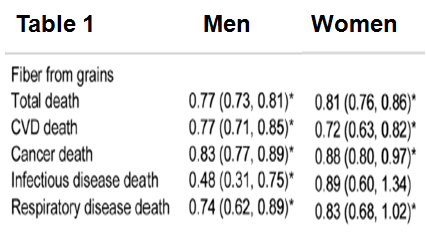
Which dietary component was associated with this reduced risk, fiber from grains, fruits, vegetables or beans? Relative risk (including 95% confidence intervals) for men is shown in Table 1.

Grains Fiber Mortality Table 1

In comparison with the lowest grain fiber intake, those with the highest intake had significantly reduced risk of 23%, 23%, 17%, 52% and 26% death from all causes, cardiovascular disease, cancer, infectious diseases and, respiratory diseases, respectively. In women, fiber from grains significantly reduced mortality risk for each of these categories by 17-28%, with the exception of deaths from infectious disease. So, for the Paleo types who say don’t eat whole grains, the evidence doesn’t support that idea!

In Table 2 we see that fiber from fruits was not significantly associated with reduced mortality risk for any outcome. Does that mean don’t eat fruit? No. Fruit intake is well documented to be associated with improved health, so other components besides fruit fiber are likely involved.

Fruit Fiber Mortality Table 2

What about mortality risk for fiber from vegetables (Table 3)?

Vegetable Fiber Mortality Table 3

In men, compared with the lowest vegetable fiber intake, those with the highest vegetable fiber intake had 5% and 8% significantly reduced all-cause mortality risk and, cancer deaths, respectively. In women, all-cause mortality was significanty reduced by 5%, whereas respiratory disease deaths were reduced by 28%.

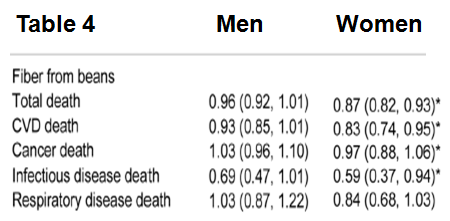
The association between fiber from beans with mortality risk is shown in Table 4.

Beans Fiber Mortality Table 4

Fiber from beans was not associated with reduced mortality risk for any outcome in men, but, all-cause, CVD, cancer and infectious disease deaths were significantly reduced by 13%, 17%, 3% and 41%, respectively in women.

The take home message? Eat more fiber!

If you’re interested, please have a look at my book!

References:

Park Y, Subar AF, Hollenbeck A, Schatzkin A. Dietary fiber intake and mortality in the NIH-AARP diet and health study. Arch Intern Med. 2011 Jun 27;171(12):1061-8.


Grapes vs. Raisins: A Nutritional Analysis

If your goal is optimal nutrition, would you choose grapes or raisins? To most, the obvious answer would be grapes, because they’re less calorie dense than raisins. Grapes contain 20 calories per ounce, whereas raisins contain 85 calories/ounce. But, what if I asked the same question, and you had 100 calories to spend on either grapes or raisins? Although they’re the same fruit-raisins are dehydrated grapes-is there a difference in nutrition, when normalized to calories?

Before delving into the nutritional comparison it is important to briefly discuss what happens during the dehydration process. The grape obtains energy through photosynthesis occurring in the green stem. Once the grape is removed from its stem, it still has an energy requirement that needs to be met. Since the stem is no longer providing this energy, the grape begins to use its own chemical processes to maintain energy demand. At the core of the difference between the raisin and the grape is that once the grape leaves the stem, it starts to break down its own energy stores (ATP) to maintain the cellular energy demand, a process that consumes water.

Are there nutritional differences between the grapes and raisins?

grapes raisins

In the table we see that when normalized to 100 calories, there isn’t a difference in protein, fat or carbohydrate, when comparing grapes and raisins.

grapes raisins2

Among the minerals, Copper content is reduced by more than 40% in raisins when compared with grapes. Copper is a cofactor for the antioxidant enzyme, Copper-Zinc Superoxide Dismutase. That its content reduced in raisins indicates a diminished antioxidant response.

grapes raisins3

Antioxidant depletion in raisins is also evident when looking at the vitamin list. Vitamin C (95% reduced), β-Carotene (100%), Vitamin A (100%), Leutein + Zeaxanthin (100%), Vitamin E: α-Tocopherol (86%), and Vitamin E: γ-Tocopherol (90%) are all dramatically reduced in raisins, when compared with grapes. That raisins are depleted in antioxidants, when compared with grapes is confirmed by looking at their respective ORAC (Oxygen Radical Absorbance Capacity) values: 261 for grapes vs. 113 for raisins.

The B-vitamins riboflavin (59%), pantothenate (56%), and Vitamin B6 (54%), each of which are required for efficient energy metabolism are reduced in raisins.

Finally, both Vitamin K (94%) and choline (neurotransmitter, 54%) are also reduced in raisins, when compared with grapes.

So, if your interest is optimal nutrition, eat grapes, not raisins!

If you’re interested, please have a look at my book! 


References

Reference values for raisins and grapes obtained from http://www.nal.usda.gov/fnic/foodcomp/search/

ORAC values for raisins and grapes obtained from w ww.ars.usda.gov/SP2UserFiles/Place/…/Data/ORAC/ORAC_R2.pdf

Raw Vegan vs. Vegan: Which Diet is Best for Optimal for Health?

In a previous article I wrote about how vegans have been shown to have decreased risk of heart disease, cancer, and all-cause mortality. In addition, in 3 separate articles I’ve written about how cooking food at high temperature (above boiling, 212ºF), whether it is roasting, baking, frying or grilling produces molecules that have been shown to shorten lifespan (AGE products), and, that cause cancer in rodents (both acrylamide and furan). Collectively these data indicate that a vegan diet without cooking any of the food at high temperature is optimal for health. However, within the confines of a vegan diet, which is best for health, raw, or raw plus boiled? In this article, I will discuss why a purely raw food diet is not optimal for health.

In short, the reason is because of fructose. Fructose isn’t only found in HFCS, it’s also the main sugar found in fruit. Raw food diets consist of nuts, seeds, fruit and vegetables. However, on a 80-10-10 diet, in which nuts are rarely used, almost all of the calories will come from fruit. For example, bananas contain 27% fructose (http://ndb.nal.usda.gov/ndb/foods/list). In other words, if you eat nothing but bananas in a single day, this would be equivalent to a 27% fructose diet. And, on the fructose scale, bananas are relatively low in fructose. For example, strawberries, cherries, blueberries, oranges, peaches, pears, grapes, watermelon and apples contain 34%, 35%, 35%, 36%, 40%, 46%, 48%, 53%, 53% fructose, respectively. If you ate nothing but watermelon all day you would be on a 46% fructose diet. So, are there any adverse health effects of this amount of dietary fructose?

The answer is yes: both high and low fructose diets have been shown to elevate blood levels of triglycerides, which are a well documented risk factor for cardiovascular disease (Austin et al. 1998). On a 20% fructose diet for 5 weeks, triglycerides (20%), LDL (12%) and total cholesterol (10%) each increased (Reiser et al. 1989). In contrast, although triglycerides were not found to elevated after 4 weeks of a 20% fructose diet (compared with 3% fructose in the controls) in a separate study, both LDL and total cholesterol were significantly elevated (Swanson et. al  1992). However, evidence from 2 additional studies in humans clearly show the positive association between increased fructose intake and elevated triglycerides. Le et. al (2006) found that fructose supplemented at 1.5g/kg body weight for only 1 month was sufficient to raise blood levels of triglycerides by 36% and VLDL-triglycerides by 72%. The amount of fructose supplemented is the Le study is equivalent to 75g and 105g fructose for a 50kg and 70 kg woman and man, respectively, and can easily be obtained by eating 11-15 bananas. In addition, Faeh et. al (2005) showed that fructose supplemented at 3 grams/kg body weight increased triglycerides by 79%. This amount of supplemented fructose is equivalent to eating 22-30 bananas. In addition, these are relatively low-fructose containing diets.

In contrast, rats fed a 67% fructose diet (the control diet contained only starch) more than doubled plasma triglycerides, increased the concentration of triglycerides in liver, increased liver size, and, decreased liver copper content. The importance of copper depletion is illustrated by its role as a cofactor in the enzyme Copper-Zinc superoxide dismutase (CuZnSOD), the first line of defense against superoxide radicals located in the cytosol of all cells. Depletion of liver copper would be expected to reduce CuZnSOD activity, thereby increasing liver oxidative stress. Indeed, the concentration of lipid peroxidation products was shown to be higher in plasma, heart and urine in rats fed the high fructose diet (Busserolles et al. 2003). The good news is that an all fruit diet would never reach the 67% fructose diet found in the Busserolle study, but evidence from relatively low fructose diets (20%) still show elevations in triglycerides.

If on a raw food diet the answer is to not to eat only fruit, what should be substituted? As mentioned earlier, there is no risk of forming AGE products, acrylamide or furan when boiling food. Therefore, substitution of some amount of fruit on a raw food diet, perhaps one third to half of the total calories should come from whole grains. Boiled whole grains (with vegetables, for the added flavor) is a great way to keep your total fructose intake relatively low. To ensure no loss of nutrients during the boiling process, don’t dump the soup, drink it, it’s delicious! The tocotrienols found almost exclusively in whole grains have been shown to reduce cholesterol (Zaiden et. al 2010), to reduce inflammation (Wu et al. 2008), to reduce DNA damage (Chin et al. 2008), to reduce cancer progression (Wada et al. 2005), and are neuroprotective (Khana et al. 2003). Therefore, when substituting fruit for whole grains, you won’t be sacrificing nutrition!

From a personal experience, in 2011 I switched from a Mediterranean diet to almost exclusively raw vegan. However, my triglycerides, which have never been higher than 60 mg/dL jumped from 40 mg/dL in 2011 to 90 in 2012! Nothing else changed in my routine-the supplements that I take, or how often I exercise, my body weight/composition was the same-only my diet changed. Based on this, it seems like raw plus boiled may be the path to optimal health!

If you’re interested, please have a look at my book!

References:
Austin MA, Holkanson JE, Edwards KL. Hypertriglyceridemia as a cardiovascular risk factor. Am J Cardiol 1998;81:7B-12B.

Busserolles J, Gueux E, Rock E, Demigné C, Mazur A, Rayssiguier Y. Oligofructose protects against the hypertriglyceridemic and pro-oxidative effects of a high fructose diet in rats.
J Nutr. 2003 Jun;133(6):1903-8.

Chin SF, Hamid NA, Latiff AA, Zakaria Z, Mazlan M, Yusof YA, Karim AA, Ibahim J, Hamid Z, Ngah WZ. Reduction of DNA damage in older healthy adults by Tri E Tocotrienol supplementation. Nutrition. 2008 Jan;24(1):1-10.

Faeh D, Minehira K, Schwarz J, Periasami R, Seongus P, Tappy L. Effect of fructose overfeeding and fish oil administration on hepatic de novo lipogenesis and insulin sensitivity in healthy males. Diabetes 2005;54: 1907-13.

Khanna S, Roy S, Ryu H, Bahadduri P, Swaan PW, Ratan RR, Sen CK. Molecular basis of vitamin E action: tocotrienol modulates 12-lipoxygenase, a key mediator of glutamate-induced neurodegeneration J Biol Chem. 2003 Oct 31;278(44):43508-15.

Lê KA, Faeh D, Stettler R, Ith M, Kreis R, Vermathen P, Boesch C, Ravussin E, Tappy L. A 4-wk high-fructose diet alters lipid metabolism without affecting insulin sensitivity or ectopic lipids in healthy humans. Am J Clin Nutr. 2006 Dec;84(6):1374-9.

Fructose data in foods provided by http://ndb.nal.usda.gov/ndb/foods/list

Reiser S, Powell AS, Scholfield DJ, Panda P, Ellwood KC, Canary JJ. Blood lipids, lipoproteins, apoproteins, and uric acid in men fed diets containing fructose or high-amylose cornstarch. Am J Clin Nutr. 1989 May;49(5):832-9.

Swanson JE, Laine DC, Thomas W, Bantle JP. Metabolic effects of dietary fructose in healthy subjects. Am J Clin Nutr. 1992 Apr;55(4):851-6.

Wada S, Satomi Y, Murakoshi M, Noguchi N, Yoshikawa T, Nishino H. Tumor suppressive effects of tocotrienol in vivo and in vitro. Cancer Lett. 2005;229:181-91.

Wu SJ, Liu PL, Ng LT. Tocotrienol-rich fraction of palm oil exhibits anti-inflammatory property by suppressing the expression of inflammatory mediators in human monocytic cells. Mol Nutr Food Res. 2008 Aug;52(8):921-9.

Zaiden N, Yap WN, Ong S, Xu CH, Teo VH, Chang CP, Zhang XW, Nesaretnam K, Shiba S, Yap YL. Gamma delta tocotrienols reduce hepatic triglyceride synthesis and VLDL secretion. J Atheroscler Thromb. 2010 Oct 27;17(10):1019-32.

Be Careful How You Prepare Your Food: Advanced Glycation End Products Shorten Lifespan!

Dietary advanced glycation end products (AGEs) are formed as a result of the heat-induced (greater than 100C) binding of sugar to protein, fat or nucleic acids (DNA or RNA). The common way to identify AGE products in food is the browning effect: deep-frying, broiling, roasting, and grilling each produce a temperature that is sufficient to greatly increase AGE product formation, relative to either raw or boiled food.

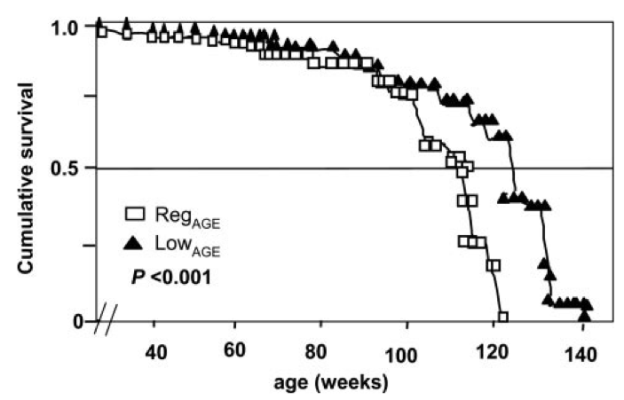
The importance of dietary AGE products is that they shorten lifespan! Cai et al. (2007) quantified the amount of one particular type of AGE product, CML (carboxy-methyl-lysine) found in the mouse diet, and then fed mice half of this amount. The low-CML diet was sufficient to significantly extend median and maximal lifespan by 15% and 6%, respectively:

age lifespan

As shown below (inset), no difference in food intake was observed when comparing the 2 groups-from this it can be concluded that the lifespan extending effect of the low-CML diet was not related to a reduction in calorie intake. Also, mice on the low-CML diet had significantly decreased body weight, evidence that shows that it isn’t just calories that we should be worried about in terms of body weight maintenance.

age bw food intake

Dietary AGE products also shorten lifespan on a calorie-restricted diet. Calorie restriction is the gold standard in terms of minimizing disease risk and extending longevity in a variety of organisms, including worms, flies, mice, dogs, and monkeys. Because CR mice eat less food than controls, the possibility existed that CR-fed animals also ate less AGE products. To address this possibility, Cai et al. (2008) quantified the amount of AGE products that CR-fed mice consumed, and then increased this amount to either equal to or greater than what mice on a regular diet ate. In terms of lifespan, mice on a low AGE, low calorie diet had increased average and maximal lifespan, relative to mice on a regular, ad libitum diet. However, lifespan was significantly reduced for CR-fed mice whose food was supplemented an AGE product amount that was equal to the regular diet!

cr age less

These data suggest that if you eat less calories than normal, you will live longer, but, if your lower-calorie diet is poor in quality (i.e. high in AGE products), you will lose the lifespan extending effect of CR.

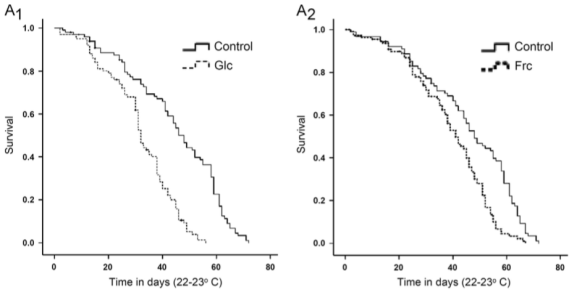
In support of the hypothesis that AGE products are bad for lifespan, dietary supplementation with glycated albumin (left) and fructosylated albumin (right) also shorten lifespan, in flies (Tsakiri et al. 2013):
fly lifespan glycation

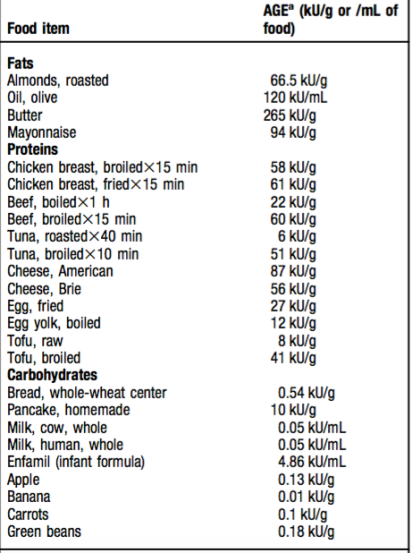
To illustrate how cooking food at a high temperature impacts AGE formation, shown below is the AGE product (CML) content for a variety of foods (Goldberg et al. 2004):
age list
For example, boiling beef (as in a chili recipe), compared with roasting it results in ~3-fold less AGE products. Boiling egg yolks results in about half as much CML when compared with frying. Interestingly, olive oil has more than double the amount of CML, when compared to broiled chicken or beef!  Finally, fruits and vegetables such as bananas, apples, carrots, and green beans have almost negligible amounts of CML.

This post is now in video form!

References:

Cai W, He JC, Zhu L, Chen X, Wallenstein S, Striker GE, Vlassara H. Reduced oxidant stress and extended lifespan in mice exposed to a low glycotoxin diet: association with increased AGER1 expression.Am J Pathol. 2007 Jun;170(6):1893-902.

Cai W, He JC, Zhu L, Chen X, Zheng F, Striker GE, Vlassara H. Oral glycotoxins determine the effects of calorie restriction on oxidant stress, age-related diseases, and lifespan. Am J Pathol. 2008 Aug;173(2):327-36.

Goldberg T, Cai W, Peppa M, Dardaine V, Baliga BS, Uribarri J, Vlassara H. Advanced glycoxidation end products in commonly consumed foods. J Am Diet Assoc. 2004 Aug;104(8):1287-91.

Tsakiri EN, Iliaki KK, Höhn A, Grimm S, Papassideri IS, Grune T, Trougakos IP. Diet-derived advanced glycation end products or lipofuscin disrupts proteostasis and reduces life span in Drosophila melanogaster. Free Radic Biol Med. 2013 Dec;65:1155-63.

If you’re interested, please have a look at my book!

Dietary Acrylamide and Cancer Risk in Human Studies: What’s the data?

In an earlier article I wrote about how cooking foods at a high temperature (greater than 250ºF, including frying, baking, roasting and grilling) produces the neurotoxic and carcinogenic compound, acrylamide (http://voices.yahoo.com/acrylamide-chocolate-another-10217911.html?cat=5). However, the adverse effects acrylamide that I discussed were solely based on rodent studies. In this follow-up article, I’ll comprehensively discuss the evidence relating dietary acrylamide with human cancer.

Before introducing the data, it’s important to note that dietary acrylamide intake in all of the studies discussed below were calculated based on food frequency questionnaires. The highest acrylamide consuming group was approximately 40 µg/day, in comparison with low consumers of dietary acrylamide, ~10 µg /day. Without a doubt these values for dietary acrylamide intake are underestimated-for example, 1 ounce of Pringles potato chips contains 70 µg of acrylamide, and the commonly thought of as “healthier chips”, Baked Lays has 31µg/ounce (1 bag of chips).

Breast Cancer

Six large epidemiological studies (ranging from 33,000-120,000 subjects) and 1 smaller study (1500-6000 subjects) investigated the association between dietary acrylamide and breast cancer risk. Of these, 1 study, the UK Women’s Cohort Study identified a 20% significantly increased risk between acrylamide intake and premenopausal breast cancer (Burley et al. 2011). The other six studies did not show an association between acrylamide intake and breast cancer risk (Pellucchi et al. 2006, Hogervorst et al. 2007, Pedersen et al. 2009, Larsson et al. 2009, Wilson et al. 2009, Wilson et al. 2010).

Endometrial Cancer

Three large epidemiological studies have investigated the association between dietary acrylamide and endometrial cancer. In two of these studies, risk of cancer was increased by 41% and 99%, respectively (Wilson et al. 2010, Hogervorst et al. 2007). No association between dietary acrylamide intake and risk of endometrial cancer was found in the Swedish Mammography Study (Larsson et al. 2009).

Ovarian Cancer

No association between dietary acrylamide and risk of ovarian cancer was found in the small- scale Italian Cohort study, or, in 2 large-scale epidemiological studies (Pellucchi et al. 2006, Larsson et al. 2009, Wilson et al. 2010). However, a 122% increased risk for ovarian cancer in non-smokers was found in the Netherlands Cohort Study on Diet and Cancer (Hogervorst et al. 2007).

Prostate, Pancreatic, Brain Cancer

Five separate studies found no association between dietary acrylamide and risk of prostate cancer (Pellucchi et al. 2006, Hogervorst et al. 2008, Wilson et al. 2009, Larsson et al. 2009, Wilson et al. 2012). Similarly, pancreatic cancer risk is not increased (Pelucchi et al. 2011, Hogervorst et al. 2008), nor is brain cancer (Hogervorst et al. 2009), or, thyroid cancer (Schouten et al. 2009).

Esophageal cancer

One small study (987 subjects) found a 23% increased risk for esophageal cancer, and an 88% increased risk in those with a BMI greater than 25. In two other studies (Pellucchi et al. 2006, Hogervorst et al. 2008), no association between dietary acrylamide and esophageal cancer was found.

Head-neck cancer

Increased risk for oral-cavity cancer in female non-smokers in a large study (121,000 subjects; Schouten et al. 2009) was found. No association for oral cavity, pharynx or larynx cancer in a smaller study (1500-6000 subjects; Pellucchi et al. 2006)

Kidney Cancer

Although risk of kidney cancer was significantly increased by 59%, it appears as if this data was skewed by smokers. In non-smokers, risk of kidney cancer was not significant (Pellucchi et al. 2006). No association between dietary acrylamide and risk of kidney cancer was also identified in three additional studies (Mucci et al. 2003, Mucci  et al. 2004, Pellucchi et al. 2007).

Gastric, Colon, Rectal cancer

A small study with 1129 subjects found a 40% decreased risk of large bowel cancer (Mucci  et al. 2003). Four studies have not found a similar association (Pellucchi et al. 2006, Mucci et al. 2006, Hogervorst et al. 2008, Larsson et al. 2009).

Lung Cancer

A 55% decreased risk of lung cancer, in women was identified by Hogervorst et al. (2009).

Bladder cancer

Significant only in smokers, as 15+ cigarettes/day significantly increased risk of bladder cancer in those with the highest dietary acrylamide intake, relative to the lowest intake (Hogervorst et al. 2008).

Blood cancer

Multiple myeloma and follicular myeloma were found to be significantly increased by 14% and 28% for every 10 µg increment in dietary acrylamide (Bongers et al. 2012).

Conclusions

The easy interpretation of scientific studies is that if six studies show no effect and one study shows a positive effect, that the no effect-data is the real answer. For example, in the case of breast cancer, six studies showed no effect, whereas one study showed a significant association between acrylamide and premenopausal breast cancer. Should we conclude that there is no risk for breast cancer? As I mentioned earlier, it is likely that total dietary acrylamide intake was underestimated, and therefore, it is my opinion that none of the 25 studies should have shown an association between acrylamide and cancer. Therefore, that there was indeed a significant association for breast cancer with potentially underestimated acrylamide values is significant. Also, dietary acrylamide was shown to be significantly associated with myeloma, head-neck cancer, esophageal cancer, endometrial cancer and ovarian cancer. Paradoxically, dietary acrylamide reduced risk of lung and large bowel cancer.

What should someone who is interested in optimal health do with this information? Knowing that dietary acrylamide is indeed significantly associated with increased risk of human cancers, I would reduce or eliminate cooking food at a high temperature. I have!

If you’re interested, please have a look at my book!

References:

Bongers ML, Hogervorst JG, Schouten LJ, Goldbohm RA, Schouten HC, van den Brandt PA. Dietary acrylamide intake and the risk of lymphatic malignancies: the Netherlands Cohort Study on diet and cancer. PLoS One. 2012;7(6):e38016.

Burley VJ, Greenwood DC, Hepworth SJ, Fraser LK, de Kok TM, van Breda SG, Kyrtopoulos SA, Botsivali M, Kleinjans J, McKinney PA, Cade JE. Dietary acrylamide intake and risk of breast cancer in the UK women’s cohort. Br J Cancer. 2010 Nov 23;103(11):1749-54.

Hogervorst JG, Schouten LJ, Konings EJ, Goldbohm RA, van den Brandt PA. A prospective study of dietary acrylamide intake and the risk of endometrial, ovarian, and breast cancer. Cancer Epidemiol Biomarkers Prev. 2007 Nov;16(11):2304-13.

Hogervorst JG, Schouten LJ, Konings EJ, Goldbohm RA, van den Brandt PA. Dietary acrylamide intake and the risk of renal cell, bladder, and prostate cancer. Am J Clin Nutr. 2008 May;87(5):1428-38

Hogervorst JG, Schouten LJ, Konings EJ, Goldbohm RA, van den Brandt PA. Dietary acrylamide intake is not associated with gastrointestinal cancer risk. J Nutr. 2008 Nov;138(11):2229-36.

Hogervorst JG, Schouten LJ, Konings EJ, Goldbohm RA, van den Brandt PA. Lung cancer risk in relation to dietary acrylamide intake. J Natl Cancer Inst. 2009 May 6;101(9):651-62.

Hogervorst JG, Schouten LJ, Konings EJ, Goldbohm RA, van den Brandt PA. Dietary acrylamide intake and brain cancer risk. Cancer Epidemiol Biomarkers Prev. 2009 May;18(5):1663-6.

Larsson SC, Akesson A, Wolk A. Long-term dietary acrylamide intake and breast cancer risk in a prospective cohort of Swedish women. Am J Epidemiol. 2009 Feb 1;169(3):376-81.

Larsson SC, Håkansson N, Akesson A, Wolk A. Long-term dietary acrylamide intake and risk of endometrial cancer in a prospective cohort of Swedish women. Int J Cancer. 2009 Mar 1;124(5):1196-9.

Larsson SC, Akesson A, Bergkvist L, Wolk A. Dietary acrylamide intake and risk of colorectal cancer in a prospective cohort of men. Eur J Cancer. 2009 Mar;45(4):513-6.

Larsson SC, Akesson A, Wolk A. Long-term dietary acrylamide intake and risk of epithelial ovarian cancer in a prospective cohort of Swedish women. Cancer Epidemiol Biomarkers Prev. 2009 Mar;18(3):994-7.

Larsson SC, Akesson A, Wolk A. Dietary acrylamide intake and prostate cancer risk in a prospective cohort of Swedish men. Cancer Epidemiol Biomarkers Prev. 2009 Jun;18(6):1939-41.

Lin Y, Lagergren J, Lu Y. Dietary acrylamide intake and risk of esophageal cancer in a population-based case-control study in Sweden. Int J Cancer. 2011 Feb 1;128(3):676-81.

Mucci LA, Dickman PW, Steineck G, Adami HO, Augustsson K. Dietary acrylamide and cancer of the large bowel, kidney, and bladder: absence of an association in a population-based study in Sweden. Br J Cancer. 2003 Jan 13;88(1):84-9.

Mucci LA, Lindblad P, Steineck G, Adami HO. Dietary acrylamide and risk of renal cell cancer. Int J Cancer. 2004 May 1;109(5):774-6.

Mucci LA, Adami HO, Wolk A. Prospective study of dietary acrylamide and risk of colorectal cancer among women. Int J Cancer. 2006 Jan 1;118(1):169-73.

Pedersen GS, Hogervorst JG, Schouten LJ, Konings EJ, Goldbohm RA, van den Brandt PA. Dietary acrylamide intake and estrogen and progesterone receptor-defined postmenopausal breast cancer risk. Breast Cancer Res Treat. 2010 Jul;122(1):199-210.

Pelucchi C, Galeone C, Levi F, Negri E, Franceschi S, Talamini R, Bosetti C, Giacosa A, La Vecchia C. Dietary acrylamide and human cancer. Int J Cancer. 2006 Jan 15;118(2):467-71.

Pelucchi C, Galeone C, Dal Maso L, Talamini R, Montella M, Ramazzotti V, Negri E, Franceschi S, La Vecchia C. Dietary acrylamide and renal cell cancer. Int J Cancer. 2007 Mar 15;120(6):1376-7.

Pelucchi C, Galeone C, Talamini R, Negri E, Polesel J, Serraino D, La Vecchia C. Dietary acrylamide and pancreatic cancer risk in an Italian case–control study. Ann Oncol. 2011 Aug;22(8):1910-5.

Schouten LJ, Hogervorst JG, Konings EJ, Goldbohm RA, van den Brandt PA. Dietary acrylamide intake and the risk of head-neck and thyroid cancers: results from the Netherlands Cohort Study. Am J Epidemiol. 2009 Oct 1;170(7):873-84.

Wilson KM, Mucci LA, Cho E, Hunter DJ, Chen WY, Willett WC. Dietary acrylamide intake and risk of premenopausal breast cancer. Am J Epidemiol. 2009 Apr 15;169(8):954-61.

Wilson KM, Bälter K, Adami HO, Grönberg H, Vikström AC, Paulsson B, Törnqvist M, Mucci LA. Acrylamide exposure measured by food frequency questionnaire and hemoglobin adduct levels and prostate cancer risk in the Cancer of the Prostate in Sweden Study. Int J Cancer. 2009 May 15;124(10):2384-90.

Wilson KM, Mucci LA, Rosner BA, Willett WC. A prospective study on dietary acrylamide intake and the risk for breast, endometrial, and ovarian cancers. Cancer Epidemiol Biomarkers Prev. 2010 Oct;19(10):2503-15.

Wilson KM, Giovannucci E, Stampfer MJ, Mucci LA. Dietary acrylamide and risk of prostate cancer. Int J Cancer. 2012 Jul 15;131(2):479-87.