Join us on Patreon! https://www.patreon.com/MichaelLustgartenPhD
Paper referenced in the video:
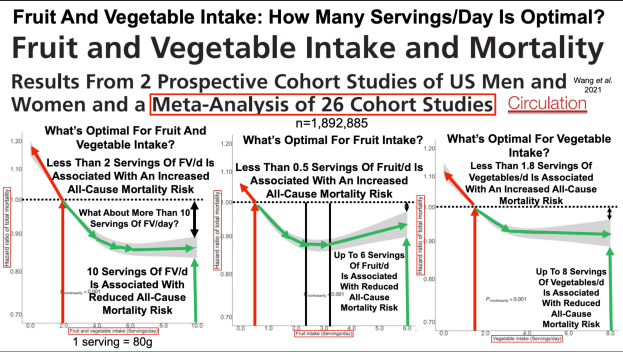
Fruit and Vegetable Intake and Mortality Results From 2 Prospective Cohort Studies of US Men and Women and a Meta-Analysis of 26 Cohort Studies
Join us on Patreon! https://www.patreon.com/MichaelLustgartenPhD
Paper referenced in the video:
Fruit and Vegetable Intake and Mortality Results From 2 Prospective Cohort Studies of US Men and Women and a Meta-Analysis of 26 Cohort Studies

Join us on Patreon! https://www.patreon.com/MichaelLustgartenPhD
Papers referenced in the video: Chocolate consumption and all-cause and cause-specific mortality in a US population: a post hoc analysis of the PLCO cancer screening trial https://pubmed.ncbi.nlm.nih.gov/34329196/
Short-term administration of dark chocolate is followed by a significant increase in insulin sensitivity and a decrease in blood pressure in healthy persons https://pubmed.ncbi.nlm.nih.gov/15755830/
Other RCTs for the effect of chocolate on health: Sub-Chronic Consumption of Dark Chocolate Enhances Cognitive Function and Releases Nerve Growth Factors: A Parallel-Group Randomized Trial https://pubmed.ncbi.nlm.nih.gov/31744119/
Habitual cocoa intake reduces arterial stiffness in postmenopausal women regardless of intake frequency: a randomized parallel-group study https://pubmed.ncbi.nlm.nih.gov/27881914/
High Flavonoid Cocoa Supplement Ameliorates Plasma Oxidative Stress and Inflammation Levels While Improving Mobility and Quality of Life in Older Subjects: A DoubleBlind Randomized Clinical Trial https://pubmed.ncbi.nlm.nih.gov/31056655/
Dietary epicatechin improves survival and delays skeletal muscle degeneration in aged mice https://pubmed.ncbi.nlm.nih.gov/30096038/
USDA flavonoid database https://www.ars.usda.gov/arsuserfiles/80400525/data/flav/flav_r03-1.pdf

Join us on Patreon! https://www.patreon.com/MichaelLustgartenPhD
Papers referenced in the video:
Dietary Intakes of Eggs and Cholesterol in Relation to All-Cause and Heart Disease Mortality: A Prospective Cohort Study https://pubmed.ncbi.nlm.nih.gov/32400247/
Associations of Dietary Cholesterol or Egg Consumption With Incident Cardiovascular Disease and Mortality https://pubmed.ncbi.nlm.nih.gov/30874756/
Join us on Patreon! https://www.patreon.com/MichaelLustgartenPhD
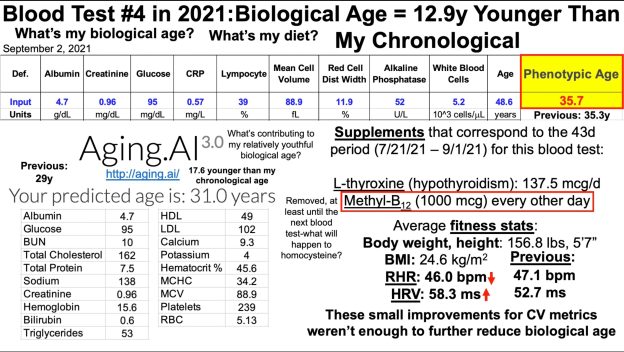
Levine’s Biological age calculator is embedded as an Excel file in this link: https://michaellustgarten.wordpress.com/2019/09/09/quantifying-biological-age/
DNA methylation GrimAge strongly predicts lifespan and healthspan
https://pubmed.ncbi.nlm.nih.gov/30669119/
Fisetin is a senotherapeutic that extends health and lifespan https://www.ncbi.nlm.nih.gov/pmc/articles/PMC6197652/
Dietary intakes of flavonols, flavones and isoflavones by Japanese women and the inverse correlation between quercetin intake and plasma LDL cholesterol concentration
https://pubmed.ncbi.nlm.nih.gov/10958819/
NAD and the aging process: Role in life, death and everything in between https://pubmed.ncbi.nlm.nih.gov/27825999/


Papers referenced in the video:
Loss of Life Expectancy by 10 Years or More From Elevated Aspartate Aminotransferase: Finding Aspartate Aminotransferase a Better Mortality Predictor for All-Cause and Liver-Related than Alanine Aminotransferase https://pubmed.ncbi.nlm.nih.gov/31425…
Implication of liver enzymes on incident cardiovascular diseases and mortality: A nationwide population-based cohort study https://pubmed.ncbi.nlm.nih.gov/29491…
For those who track their diet, eating only the RDA for many nutrients may not optimize health. For example, the RDA for selenium is 55 micrograms per day, but is that amount optimal for reducing risk of death for all causes?
Papers referenced in the video:
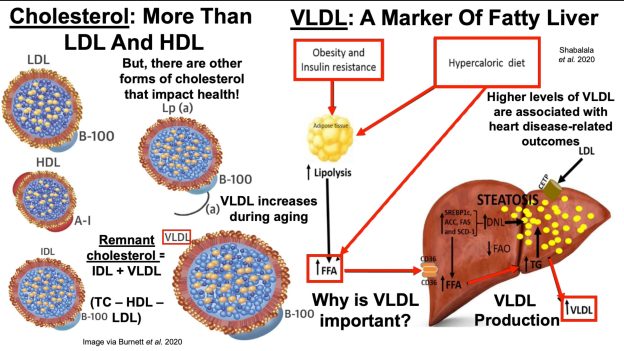
Remnant Cholesterol and Atherosclerotic Cardiovascular Disease Risk: https://www.jacc.org/doi/10.1016/j.ja…
The effect of adiponectin in the pathogenesis of non-alcoholic fatty liver disease (NAFLD) and the potential role of polyphenols in the modulation of adiponectin signaling: https://www.sciencedirect.com/science…
Joint distribution of lipoprotein cholesterol classes. The Framingham study: https://pubmed.ncbi.nlm.nih.gov/6573877/
Long-term coronary heart disease risk associated with very-low-density lipoprotein cholesterol in Chinese: the results of a 15-Year Chinese Multi-Provincial Cohort Study (CMCS): https://pubmed.ncbi.nlm.nih.gov/20223…
Remnant Cholesterol, Not LDL Cholesterol, Is Associated With Incident Cardiovascular Disease: https://pubmed.ncbi.nlm.nih.gov/33272…
Remnant cholesterol and coronary atherosclerotic plaque burden assessed by computed tomography coronary angiography: https://pubmed.ncbi.nlm.nih.gov/30870…
Premature myocardial infarction is strongly associated with increased levels of remnant cholesterol: https://pubmed.ncbi.nlm.nih.gov/26687…

Papers referenced in the video:
Bacteria Boost Mammalian Host NAD Metabolism by Engaging the Deamidated Biosynthesis Pathway: https://pubmed.ncbi.nlm.nih.gov/32130…
Comparison of the effects of nicotinic acid and nicotinamide degradation on plasma betaine and choline levels: https://pubmed.ncbi.nlm.nih.gov/27567…
Total plasma homocysteine and cardiovascular risk profile. The Hordaland Homocysteine Study: https://pubmed.ncbi.nlm.nih.gov/7474221/
Total plasma homocysteine values among elderly subjects: findings from the Maracaibo Aging Study: https://pubmed.ncbi.nlm.nih.gov/16959…
Hyperhomocysteinemia as a Risk Factor and Potential Nutraceutical Target for Certain Pathologies: https://www.ncbi.nlm.nih.gov/pmc/arti…
Hyperhomocysteinemia and risk of incident cognitive outcomes: An updated dose-response meta-analysis of prospective cohort studies: https://pubmed.ncbi.nlm.nih.gov/30826…
Association between Homocysteine Levels and All-cause Mortality: A Dose-Response Meta-Analysis of Prospective Studies: https://www.nature.com/articles/s4159…
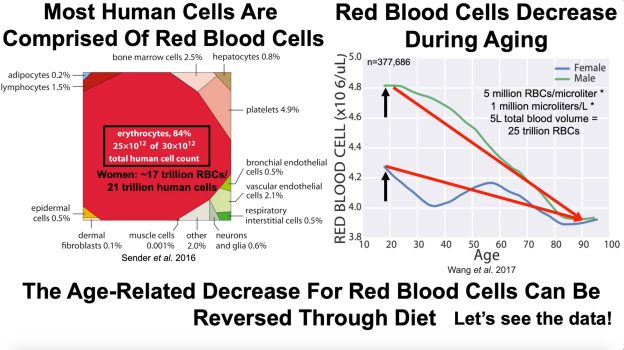
Red blood cells (RBC) are the most abundant cell type in the human body. I’ve tracked my RBC levels in conjunction with diet since 2015, and with the goal of reversing the age-related decline for RBCs, which dietary components have the strongest correlation with RBCs?
https://www.youtube.com/watch?v=3JpyDiNxNeE&feature=youtu.be
 Michael Lustgarten