Tag Archives: aging

Glutathione Restoration Improves Hallmarks Of Aging in Older Adults

Papers referenced int the video:

Deficient synthesis of glutathione underlies oxidative stress in aging and can be corrected by dietary cysteine and glycine supplementation: https://pubmed.ncbi.nlm.nih.gov/21795…​

Glycine and N-acetylcysteine (GlyNAC) supplementation in older adults improves glutathione deficiency, oxidative stress, mitochondrial dysfunction, inflammation, insulin resistance, endothelial dysfunction, genotoxicity, muscle strength, and cognition: Results of a pilot clinical trial: https://pubmed.ncbi.nlm.nih.gov/33783…

Glutathione declines during aging (Age-related changes in the glutathione redox system): https://pubmed.ncbi.nlm.nih.gov/11835…
Gut Bacteria Boost Host NAD Metabolism

Papers referenced in the video:

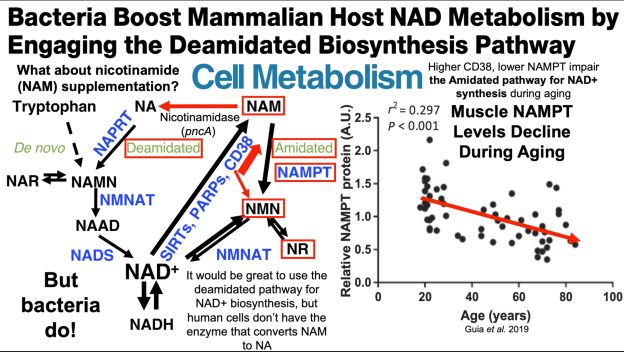
Bacteria Boost Mammalian Host NAD Metabolism by Engaging the Deamidated Biosynthesis Pathway: https://pubmed.ncbi.nlm.nih.gov/32130883/

CD38 Dictates Age-Related NAD Decline and Mitochondrial Dysfunction through an SIRT3-Dependent Mechanism: https://pubmed.ncbi.nlm.nih.gov/27304511/

Aerobic and resistance exercise training reverses age-dependent decline in NAD + salvage capacity in human skeletal muscle: https://pubmed.ncbi.nlm.nih.gov/31207144/

Telomere Length: How Does it Compare Against Other Biological Age Metrics?

Papers referenced in the video:

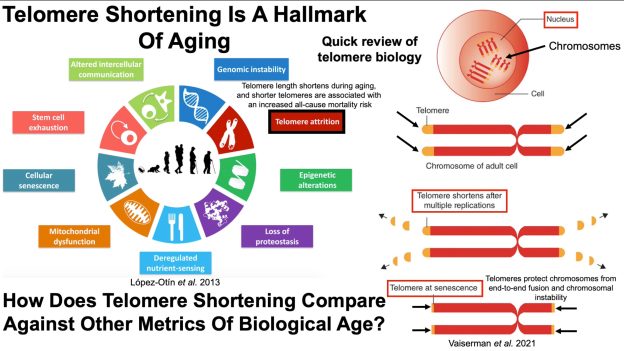
The Hallmarks of Aging: https://www.ncbi.nlm.nih.gov/pmc/arti…

Telomere Length as a Marker of Biological Age: State-of-the-Art, Open Issues, and Future Perspectives: https://www.ncbi.nlm.nih.gov/pmc/arti…

Telomeres and the natural lifespan limit in humans: https://www.ncbi.nlm.nih.gov/pmc/arti…

Telomere Length and All-Cause Mortality: A Meta-analysis: https://pubmed.ncbi.nlm.nih.gov/30254…

Comparability of biological aging measures in the National Health and Nutrition Examination Study, 1999-2002: https://pubmed.ncbi.nlm.nih.gov/30999…

Longitudinal trajectories, correlations and mortality associations of nine biological ages across 20-years follow-up: https://elifesciences.org/articles/51507

Eleven Telomere, Epigenetic Clock, and Biomarker-Composite Quantifications of Biological Aging: Do They Measure the Same Thing? https://pubmed.ncbi.nlm.nih.gov/29149…

HDL Update: Age-Related Changes, All-Cause Mortality Risk, And Progress Towards The Optimal Range

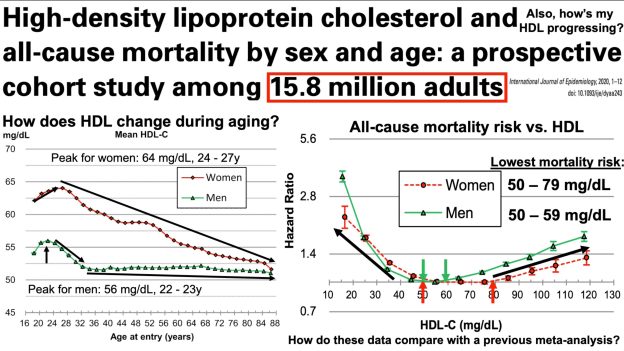
In November 2020, I made a HDL video based on a meta-analysis in ~3.4 million subjects that was published in July 2020. In Dec 2020, a larger study (n=15.8 million subjects) was published-those data are presented in the video, and compared against the meta-analysis.

In addition, I’ve tested my HDL 2 more times since November 2020, so how’s my progress for getting it into the optimal range? Also, I attempt to derive clinical significance by identifying correlations for higher HDL with lower Lp(a) and hs-CRP.

Video link: https://www.youtube.com/watch?v=MUuKlpyvZaU

Quantifying Biological Age: Blood Test #1 in 2021

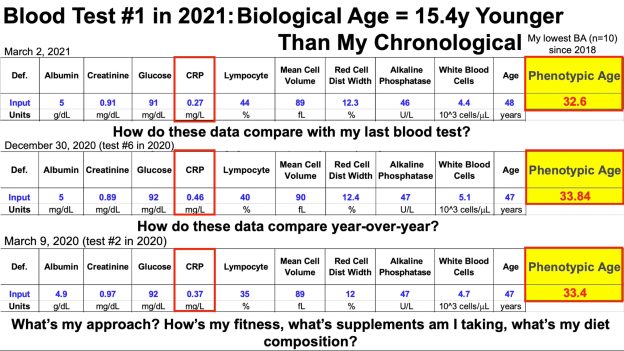
Results for my first blood test in 2021 are in-what’s my biological age, and how am I optimizing it?

If you’re interested in calculating your biological age, the spreadsheet is included as an Excel file in this link:

Red Blood Cells Decline During Aging, But Can Be Increased Through Diet

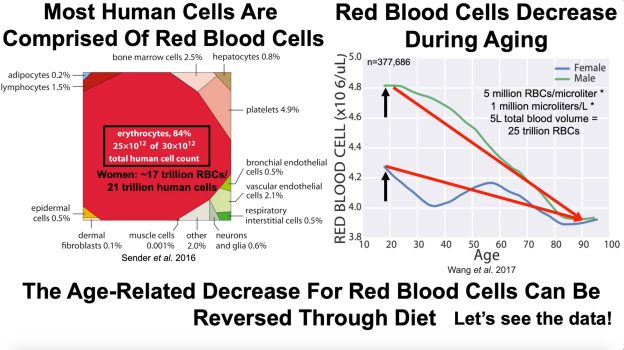
Red blood cells (RBC) are the most abundant cell type in the human body. I’ve tracked my RBC levels in conjunction with diet since 2015, and with the goal of reversing the age-related decline for RBCs, which dietary components have the strongest correlation with RBCs?

https://www.youtube.com/watch?v=3JpyDiNxNeE&feature=youtu.be

Kidney Function Declines During Aging-Can It Be Reversed?

Discussed in the video:

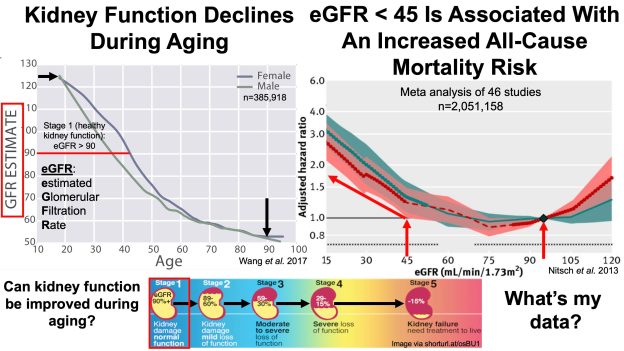
Data for changes in kidney function during aging, kidney function values that are associated with an increased risk of death for all causes

What’s my data for kidney function, 2006 – 2020?

Can diet impact kidney function?

Within my data, which foods are correlated with good kidney function?

How are the individual components of these foods (fiber, protein, omega-3 fatty acids) correlated with kidney function?

Microbes Affect The Hallmarks Of Aging: Mitochondrial Dysfunction (Part II)

The Hallmarks of Aging are well established, but what is less discussed is the impact of microbes. Viruses, including SARS-CoV-2 and HSV-1 cause mitochondrial dysfunction-more specifically, they cause mitochondria to release some of their DNA, which triggers antiviral immunity. When considering that blood levels of mitochondrial DNA increase during aging, is aging characterized by an increased viral burden?

Quantifying Biological Age With Aging.ai: 24 Blood Tests Since 2009

The maximal reduction for biological age when using the biological age calculator, Phenotypic Age, is ~20 years. In other words, if I’m 80 years old and my biomarkers are all reflective of youth, the lowest possible biological age will be ~60 years old. One reason for that is the inclusion of chronological age in the prediction of biological age, which adds strength to the correlation while simultaneously limiting the maximal biological age reduction.

To account for the possibility that youthful biomarkers at an older chronological age can yield a biological age that is more than 20 years younger, it’s important to quantify biological age using a tool that doesn’t include chronological age in its calculation. Aging.ai fits that criterion, and in the video I present biological age data with use of aging.ai for 24 blood tests since 2009.