Tag Archives: lifespan

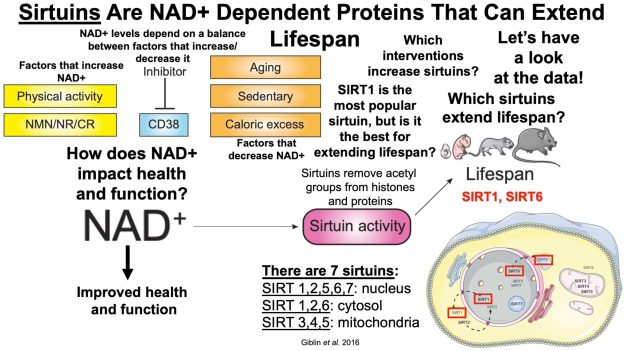
SIRT6 Positively Affects The Hallmarks Of Aging And Extends Lifespan

Papers referenced in the video:

Sirtuins, Healthspan, and Longevity in Mammals https://www.sciencedirect.com/science…

Sirt1 extends life span and delays aging in mice through the regulation of Nk2 homeobox 1 in the DMH and LH https://pubmed.ncbi.nlm.nih.gov/24011…

Resveratrol improves health and survival of mice on a high-calorie diet https://pubmed.ncbi.nlm.nih.gov/17086…

Rapamycin, But Not Resveratrol or Simvastatin, Extends Life Span of Genetically Heterogeneous Mice https://pubmed.ncbi.nlm.nih.gov/20974…

Sirt1 improves healthy ageing and protects from metabolic syndrome-associated cancer https://www.nature.com/articles/ncomm…

Restoration of energy homeostasis by SIRT6 extends healthy lifespan https://pubmed.ncbi.nlm.nih.gov/34050…

The sirtuin SIRT6 regulates lifespan in male mice https://pubmed.ncbi.nlm.nih.gov/22367…

SIRT6 in Senescence and Aging-Related Cardiovascular Diseases https://pubmed.ncbi.nlm.nih.gov/33855…

Calorie restriction-induced SIRT6 activation delays aging by suppressing NF-κB signaling https://pubmed.ncbi.nlm.nih.gov/26940…

Ergothioneine oxidation in the protection against high-glucose induced endothelial senescence: Involvement of SIRT1 and SIRT6 https://pubmed.ncbi.nlm.nih.gov/27101…

A Comprehensive Analysis into the Therapeutic Application of Natural Products as SIRT6 Modulators in Alzheimer’s Disease, Aging, Cancer, Inflammation, and Diabetes https://pubmed.ncbi.nlm.nih.gov/33920…

Acute Exercise Leads to Regulation of Telomere Associated Genes and MicroR A Expression in Immune Cells https://pubmed.ncbi.nlm.nih.gov/24752…

The effect of 12-week resistance exercise training on serum levels of cellular aging process parameters in elderly men https://pubmed.ncbi.nlm.nih.gov/32919…

High FGF21, Low Insulin And Glucose: A Pro-Longevity Strategy?

Papers referenced in the video:

FGF21 and Chronic Kidney Disease: https://www.sciencedirect.com/science…

The starvation hormone, fibroblast growth factor-21, extends lifespan in mice: https://www.ncbi.nlm.nih.gov/pmc/arti…

Inhibition of growth hormone signaling by the fasting-induced hormone FGF21: https://pubmed.ncbi.nlm.nih.gov/18585…

Alpha-Ketoglutarate, an Endogenous Metabolite, Extends Lifespan and Compresses Morbidity in Aging Mice: https://pubmed.ncbi.nlm.nih.gov/32877…

Berberine ameliorates cellular senescence and extends the lifespan of mice via regulating p16 and cyclin protein expression: https://pubmed.ncbi.nlm.nih.gov/31773…

Effects of Sex, Strain, and Energy Intake on Hallmarks of Aging in Mice: https://www.ncbi.nlm.nih.gov/pmc/arti…

Regulation of longevity by FGF21: Interaction between energy metabolism and stress responses: https://pubmed.ncbi.nlm.nih.gov/28552…

Disease-specific plasma levels of mitokines FGF21, GDF15, and Humanin in type II diabetes and Alzheimer’s disease in comparison with healthy aging: https://pubmed.ncbi.nlm.nih.gov/33131…

Aging is associated with increased FGF21 levels but unaltered FGF21 responsiveness in adipose tissue: https://pubmed.ncbi.nlm.nih.gov/30043…

Circulating levels of fibroblast growth factor-21 increase with age independently of body composition indices among healthy individuals: https://pubmed.ncbi.nlm.nih.gov/26042…

Lower All-Cause, Cardiovascular, and Cancer Mortality in Centenarians’ Offspring: https://pubmed.ncbi.nlm.nih.gov/15571…

Favorable Glucose Tolerance and Lower Prevalence of Metabolic Syndrome in Offspring without Diabetes Mellitus of Nonagenarian Siblings: The Leiden Longevity Study: https://pubmed.ncbi.nlm.nih.gov/20398…

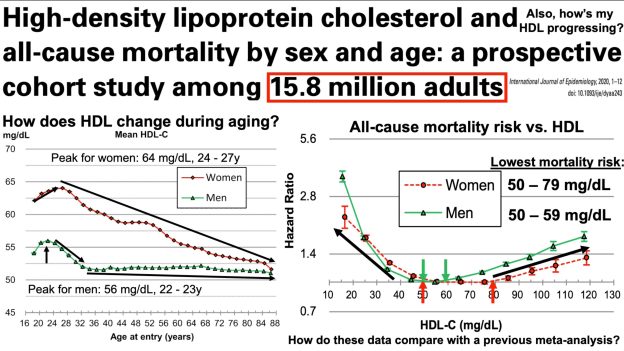
HDL Update: Age-Related Changes, All-Cause Mortality Risk, And Progress Towards The Optimal Range

In November 2020, I made a HDL video based on a meta-analysis in ~3.4 million subjects that was published in July 2020. In Dec 2020, a larger study (n=15.8 million subjects) was published-those data are presented in the video, and compared against the meta-analysis.

In addition, I’ve tested my HDL 2 more times since November 2020, so how’s my progress for getting it into the optimal range? Also, I attempt to derive clinical significance by identifying correlations for higher HDL with lower Lp(a) and hs-CRP.

Video link: https://www.youtube.com/watch?v=MUuKlpyvZaU

Carotenoids Are Associated With A Younger Epigenetic Age And Reduced All-Cause Mortality Risk

Papers referenced in the video: DNA methylation

GrimAge strongly predicts lifespan and healthspan:

https://pubmed.ncbi.nlm.nih.gov/30669…

GrimAge outperforms other epigenetic clocks in the prediction of age-related clinical phenotypes and all-cause mortality:

https://pubmed.ncbi.nlm.nih.gov/33211…

Dietary intake and blood concentrations of antioxidants and the risk of cardiovascular disease, total cancer, and all-cause mortality: a systematic review and dose-response meta-analysis of prospective studies: https://pubmed.ncbi.nlm.nih.gov/30475…

Albumin is included as a biological age predictor:

https://www.ncbi.nlm.nih.gov/pmc/arti…

https://www.ncbi.nlm.nih.gov/pmc/arti…

https://www.ncbi.nlm.nih.gov/pmc/arti…

https://pubmed.ncbi.nlm.nih.gov/30993…

Age-related change data for albumin:

https://pubmed.ncbi.nlm.nih.gov/26071…

Associations of cardiovascular biomarkers and plasma albumin with exceptional survival to the highest ages: https://www.nature.com/articles/s4146…

Quantifying Biological Age With Aging.ai: 24 Blood Tests Since 2009

The maximal reduction for biological age when using the biological age calculator, Phenotypic Age, is ~20 years. In other words, if I’m 80 years old and my biomarkers are all reflective of youth, the lowest possible biological age will be ~60 years old. One reason for that is the inclusion of chronological age in the prediction of biological age, which adds strength to the correlation while simultaneously limiting the maximal biological age reduction.

To account for the possibility that youthful biomarkers at an older chronological age can yield a biological age that is more than 20 years younger, it’s important to quantify biological age using a tool that doesn’t include chronological age in its calculation. Aging.ai fits that criterion, and in the video I present biological age data with use of aging.ai for 24 blood tests since 2009.

The Gut Microbiota Affects Health and Aging (Interview with Modern Healthspan): Parts I-VIII

Here’s the first interview clip (of a series) with Modern Healthspan on YouTube where we discuss the role of the microbiome on health and longevity:

Part II: Skin, Oral Microbiome & Immune System

Part III: Optimal Health with Soluble Fiber

Part IV – Microbial Burden & Hallmarks of Aging

Part V: Spermidine & Immune Support

Part VI: Optimal HDL & LDL

Part VII: Nuts, Seeds & Saturated Fat Intake

Part VII: My Exercise Approach for Longevity

Microbial Products Affect the Hallmarks Of Aging: 1) Mitochondrial Function

The Hallmarks of Aging are well established, but what is less discussed is the impact of microbes and/or microbial products. The bacterial metabolite, LPS, increases during aging, and it negatively impacts mitochondrial function, thereby demonstrating a role for microbial products on one of the Hallmarks of Aging, mitochondrial dysfunction.

LDL Cholesterol: What’s Optimal For Health And Longevity?

LDL is arguably the most debated biomarker in terms of what’s optimal for health. In the video, I present data showing that 100 – 140, not 50 – 70 mg/dL may be optimal in terms of minimizing disease risk and maximizing longevity.

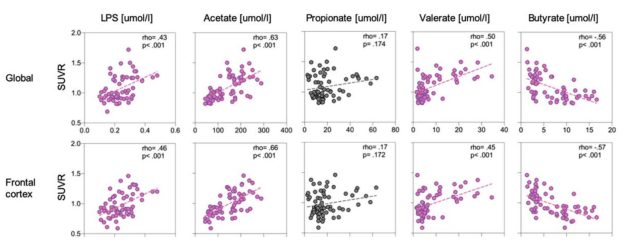
Paper Discussion: Short-Chain Fatty Acids and Lipopolysaccharide as Mediators Between Gut Dysbiosis and Amyloid Pathology in Alzheimer’s Disease

In the video below, Steve Hill from Lifespan.io and I talk about findings from a recent paper (https://content.iospress.com/articles/journal-of-alzheimers-disease/jad200306) that supports a role for the gut microbiome on Alxheimer’s disease. Check it out!