Results for my first blood test in 2021 are in-what’s my biological age, and how am I optimizing it?
If you’re interested in calculating your biological age, the spreadsheet is included as an Excel file in this link:
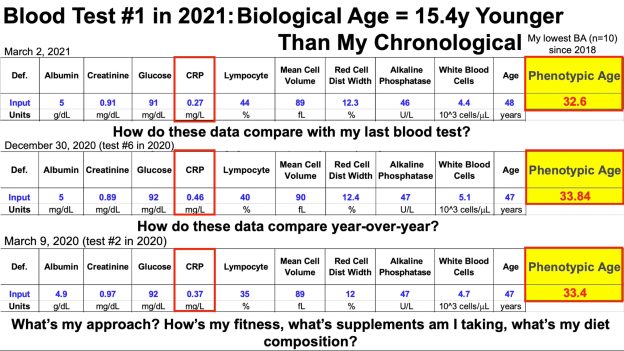
Results for my first blood test in 2021 are in-what’s my biological age, and how am I optimizing it?
If you’re interested in calculating your biological age, the spreadsheet is included as an Excel file in this link:
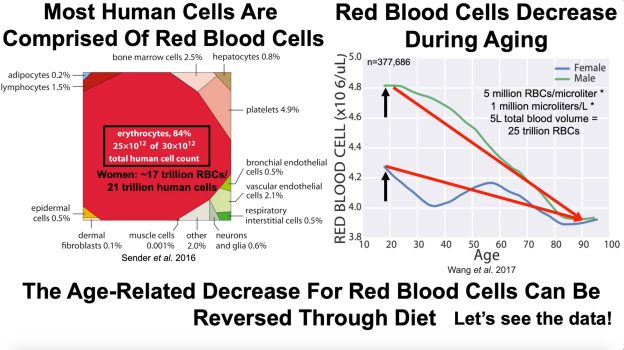
Red blood cells (RBC) are the most abundant cell type in the human body. I’ve tracked my RBC levels in conjunction with diet since 2015, and with the goal of reversing the age-related decline for RBCs, which dietary components have the strongest correlation with RBCs?
https://www.youtube.com/watch?v=3JpyDiNxNeE&feature=youtu.be
Discussed in the video:
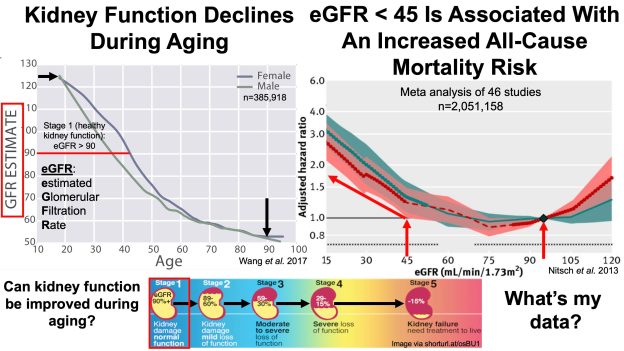
Data for changes in kidney function during aging, kidney function values that are associated with an increased risk of death for all causes
What’s my data for kidney function, 2006 – 2020?
Can diet impact kidney function?
Within my data, which foods are correlated with good kidney function?
How are the individual components of these foods (fiber, protein, omega-3 fatty acids) correlated with kidney function?
Discussed in the video:
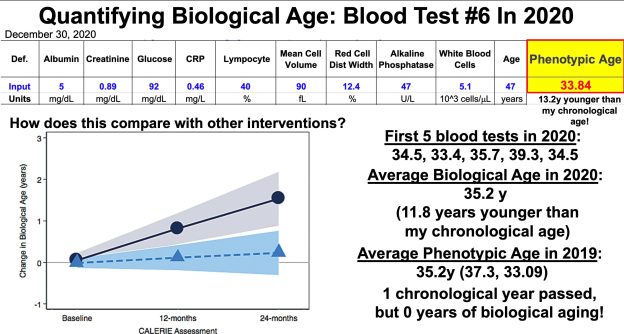
What’s my biological age on blood test #6 in 2020?
What’s my average biological age for 2020, and how does it compare with 2019?
Are there links between calorie intake, cardiovascular fitness (RHR, HRV), and diet composition with my biological age?

LDL is arguably the most debated biomarker in terms of what’s optimal for health. In the video, I present data showing that 100 – 140, not 50 – 70 mg/dL may be optimal in terms of minimizing disease risk and maximizing longevity.
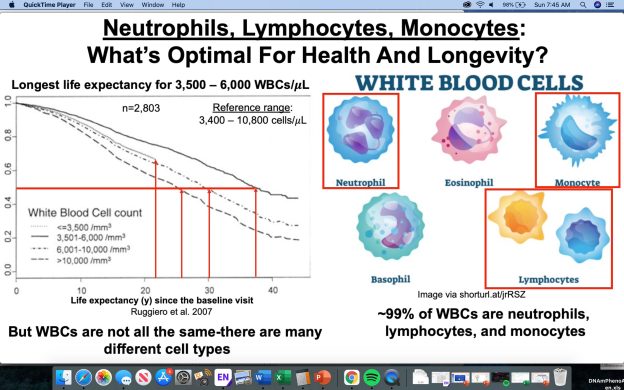
White blood cells (WBCs) comprise many different cell types, including neutrophils, lymphocytes, monocytes, eosinophils, and basophils.
Neutrophils, lymphocytes, and monocytes account for ~99% of WBCs, and accordingly, in the video I propose optimal ranges for these cell types in terms of health and longevity.
Meta-analysis for the association between HDL with all-cause mortality risk has identified HDL levels 55 – 60 mg/dL range as optimal. However, that data includes subjects up to 85y-in the video, I present data for 85y – 115yr olds that additionally suggests HDL in the 55 – 60 mg/dL range as optimal. In addition, I show my own HDL data over the past 15 years (n=34), the correlation for HDL with my diet, and how I plan on consistently increasing my 15-year average HDL of ~44 mg/dL to the 50’s.

My latest blood test results are in-how’s my biological age?
In the video I discuss my dietary approach prior to my latest blood test, the blood test results, and my plan to improve them with diet going forward.

Sleep changes during aging may impact Alzheimer’s disease risk, and with the goal of minimizing that risk, can sleep, in particular, levels of deep sleep, be optimized?
Here’s a podcast that was recorded with WildHealth, enjoy!
 Michael Lustgarten