Tag Archives: Mortality Risk

Ergothioneine: A ‘Longevity Vitamin’ With Potential Benefits For Age-Related Outcomes?

Papers referenced in the video:

Dietary Thiols: A Potential Supporting Strategy against Oxidative Stress in Heart Failure and Muscular Damage during Sports Activity: https://www.ncbi.nlm.nih.gov/pmc/arti…

Ergothioneine levels in an elderly population decrease with age and incidence of cognitive decline; a risk factor for neurodegeneration? https://pubmed.ncbi.nlm.nih.gov/27444…

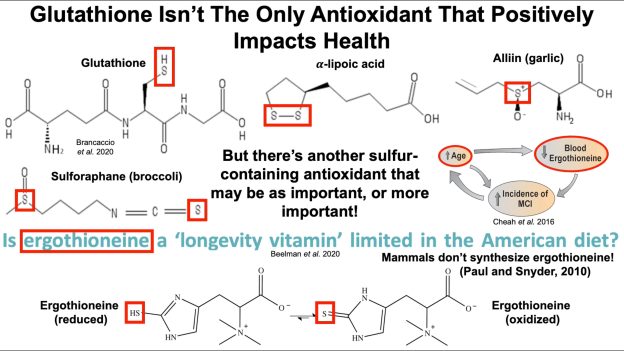
Is ergothioneine a ‘longevity vitamin’ limited in the American diet? https://www.ncbi.nlm.nih.gov/pmc/arti…

Frailty markers comprise blood metabolites involved in antioxidation, cognition, and mobility: https://pubmed.ncbi.nlm.nih.gov/32295…

Ergothioneine is associated with reduced mortality and decreased risk of cardiovascular disease: https://pubmed.ncbi.nlm.nih.gov/31672…

Ergothioneine – a diet‐derived antioxidant with therapeutic potential: https://febs.onlinelibrary.wiley.com/…

Ergothioneine, a metabolite of the gut bacterium Lactobacillus reuteri, protects against stress-induced sleep disturbances: https://www.nature.com/articles/s4139…

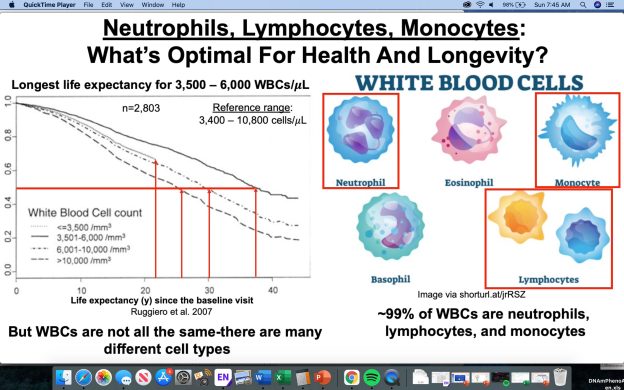
Neutrophils, Lymphocytes, Monocytes: What’s Optimal For Health And Longevity?

White blood cells (WBCs) comprise many different cell types, including neutrophils, lymphocytes, monocytes, eosinophils, and basophils.

Neutrophils, lymphocytes, and monocytes account for ~99% of WBCs, and accordingly, in the video I propose optimal ranges for these cell types in terms of health and longevity.

Longevity Genes: APOE

A reduced mortality risk and an increased lifespan has been reported for people who have APOE2 alleles, when compared with APOE3 or APOE4, but beyond associations, data for lifespan in APOE-expressing mice was recently reported, evidence that supports a causative role for APOE on longevity.

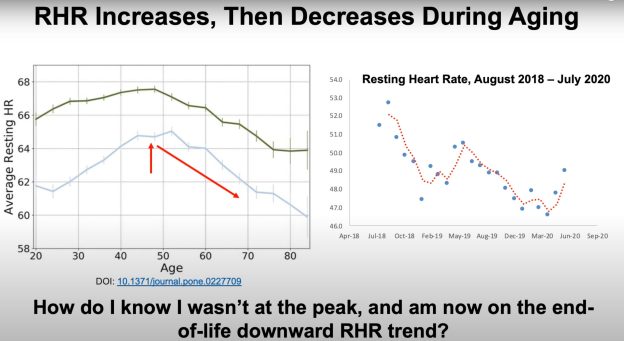
Resting Heart Rate And Heart Rate Variability: What’s Optimal?

To determine what’s optimal for resting heart rate and heart rate variability, I review the published literature for how they change during aging, and what’s associated with mortality risk. Also included are my data over the past ~2 years, to see how I compare against the literature.

Vitamin K1 (Phylloquinone): How Much Is Optimal For Health?

An adequate daily intake of Vitamin K1 is 120 and 90 micrograms/day for males and females, respectively, but are those amounts optimal for health? In this video, I present evidence that consuming more than 1000 micrograms of Vitamin K1/day may be optimal.

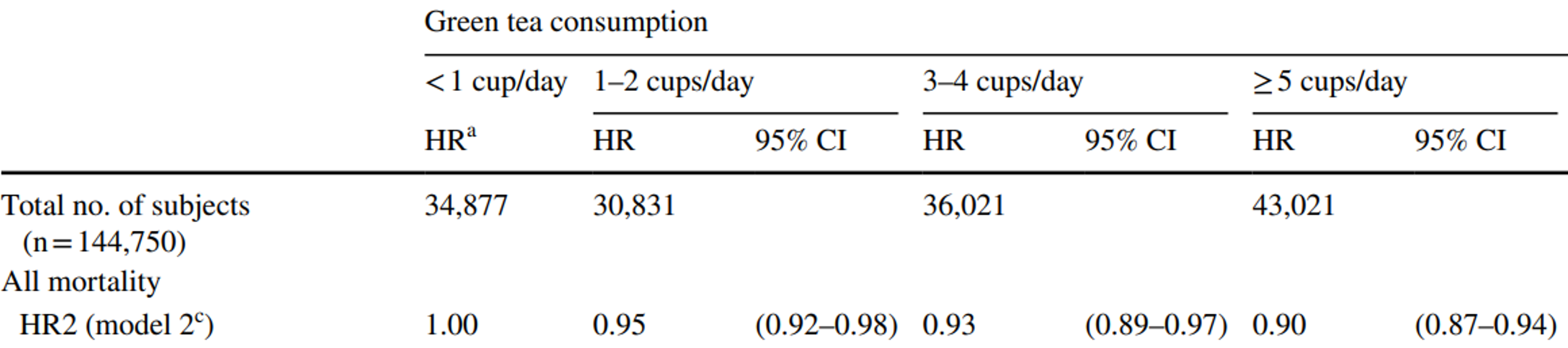
Green Tea and Mortality Risk, Update!

In an earlier post (https://michaellustgarten.wordpress.com/2019/09/15/drink-green-tea-reduce-and-all-cause-mortality-risk/), I reported that green tea consumption is associated with reduced risk of death for all causes. Now, there’s more recent data! Drinking more than 1 cup of green tea per day is associated with reduced all-cause mortality risk in a pooled analysis of 8 studies that included 313,381 subjects (age range, 40-103y; Abe et al. 2019).

In women (168,631 subjects), risk of death for all causes was reduced by 10%, 6%, and 18% for 1-2, 3-4, and greater than 5 cups/day, when compared with drinking less than 1 cup per day:

gt wom

In men (144,750 subjects), risk of death for all causes was reduced by 5%, 7%, and 10% for 1-2, 3-4, and greater than 5 cups/day, when compared with drinking less than 1 cup per day:

gtea men.png

Cheers to green tea, for health!

Reference

Abe SK, Saito E, Sawada N, Tsugane S, Ito H, Lin Y, Tamakoshi A, Sado J, Kitamura Y, Sugawara Y, Tsuji I, Nagata C, Sadakane A, Shimazu T, Mizoue T, Matsuo K, Naito M, Tanaka K, Inoue M; Research Group for the Development and Evaluation of Cancer Prevention Strategies in Japan. Green tea consumption and mortality in Japanese men and women: a pooled analysis of eight population-based cohort studies in Japan. Eur J Epidemiol. 2019 Oct;34(10):917-926. doi: 10.1007/s10654-019-00545-y.

If you’re interested, please have a look at my book!

Optimizing Biological Age: RDW%

Can biological age be optimized? The red blood cell (RBC) distribution width (RDW%) is one of the variables included in the PhenoAge biological age calculator (see https://michaellustgarten.wordpress.com/2019/09/09/quantifying-biological-age/). Although the RDW% reference range is 11.5% – 14.5%, what values are optimal in terms a youthful biological age, and minimized disease risk?

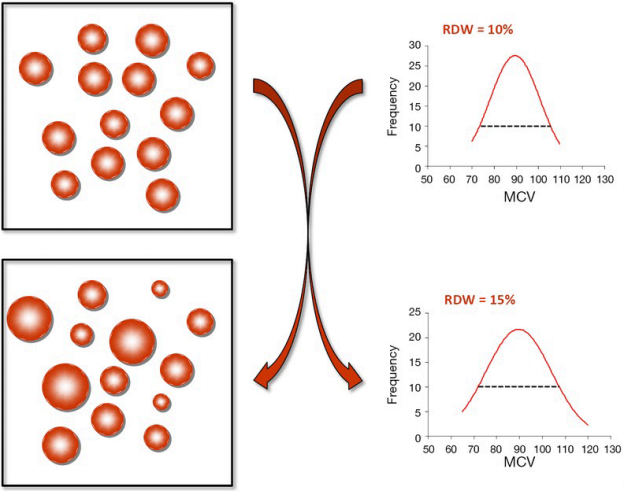
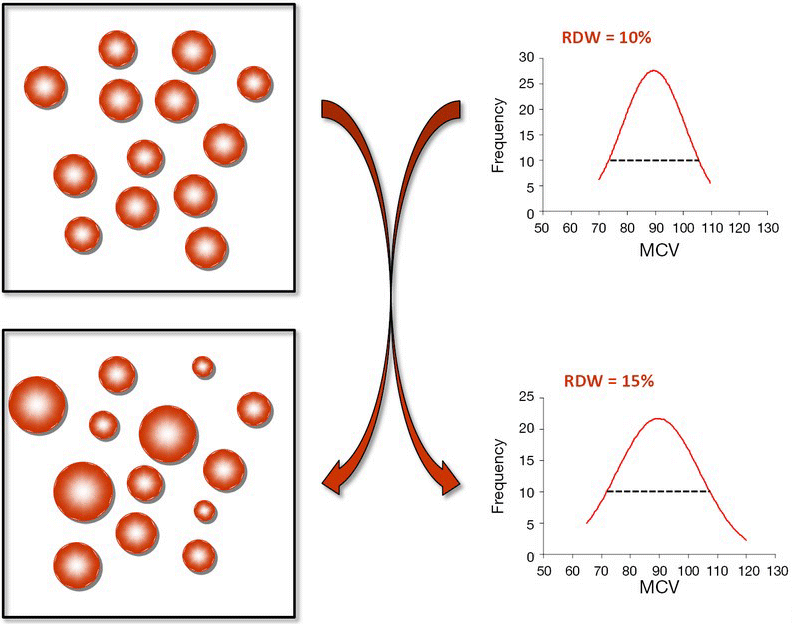
First, let’s define RDW%. RDW% is calculated by dividing the standard deviation of the average mean corpuscular volume (i.e. the average volume inside red blood cells, defined as MCV, upper right panel; image via Danese et al. 2015). When the volume inside red blood cells is approximately the same across all RBCs (upper left panel), the RDW% will be narrow, as shown by the dashed line in the upper right panel.  Conversely, during aging and in many diseases, the size and volume of RBCs are altered, resulting in a more broad RDW% (bottom left and right panels):

ani

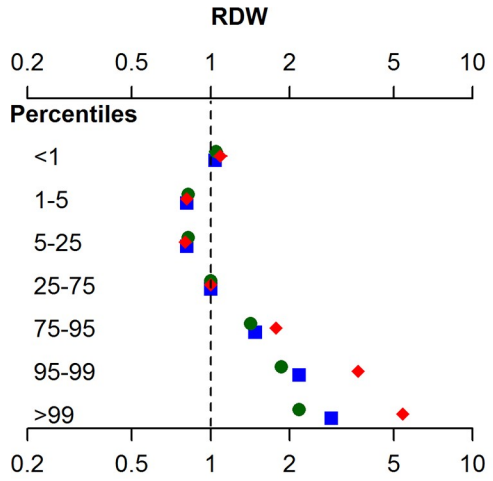
In terms of RDW%, what’s optimal for health and longevity? In the the largest study  (3,156,863 subjects) that investigated the association for risk of death for all causes with RDW%, maximally reduced risk of death was observed for RDW% between 11.4 – 12.5% (percentiles 1-5, 5-25), with mortality risk increasing for values < 11.3%, and > 12.6% (Tonelli et al. 2019):

rdw 2

This has been confirmed in other relatively large studies (240,477 subjects), as RDW% values < 12.5% were associated with maximally reduced all-cause mortality risk, with values > 12.5 associated with an increasing all-cause mortality risk (Pilling et al. 2018):

rdw 3

How does RDW% change during aging? For the 1,907 subjects of Lippi et al. (2014), RDW% increased during aging:

rdw 4

In support of this finding, RDW% also increased during aging in a larger study that included 8,089 subjects (Hoffmann et al. 2015).

Collectively, when considering the all-cause mortality and aging data, RDW% values ~ 12.5% may be optimal for health and longevity. What are my RDW% values? Plotted below are 18 RDW% measurements since 2015 (blue circles). First, note my average RDW% during that time (black line) is 12.8%, which isn’t far from the 12.5% that may be optimal for health and longevity. However, note the trend line (red), which indicates that my RDW% values are increasing during aging!

rdw 5

How do I plan on reducing my RDW%? A moderate strength correlation exists between my calorie intake with RDW% (r = 0.53), with a higher daily average calorie intake being associated with a higher RDW%:
my rdw
My plan is to shoot for a daily calorie intake ~2600 over the next month, and then retest my RDW% (and the rest of the CBC). Hopefully that brings my RDW% down to 12.5% or less. If that doesn’t work, I’ll re-calibrate, and try something else!

If you’re interested, please have a look at my book!

References

Danese E, Lippi G, Montagnana M. Red blood cell distribution width and cardiovascular diseasesJ Thorac Dis. 2015 Oct;7(10):E402-11. doi: 10.3978/j.issn.2072-1439.2015.10.04.

Hoffmann JJ, Nabbe KC, van den Broek NM. Red cell distribution width and mortality in older adults: a meta-analysis. Clin Chem Lab Med. 2015 Nov;53(12):2015-9. doi: 10.1515/cclm-2015-0155.

Lippi G, Salvagno GL, Guidi GC. Red blood cell distribution width is significantly associated with aging and gender. Clin Chem Lab Med. 2014 Sep;52(9):e197-9. doi: 10.1515/cclm-2014-0353.

Pilling LC, Atkins JL, Kuchel GA, Ferrucci L, Melzer D. Red cell distribution width and common disease onsets in 240,477 healthy volunteers followed for up to 9 years. PLoS One. 2018 Sep 13;13(9):e0203504. doi: 10.1371/journal.pone.0203504.

Tonelli M, Wiebe N, James MT, Naugler C, Manns BJ, Klarenbach SW, Hemmelgarn BR. Red cell distribution width associations with clinical outcomes: A population-based cohort studyPLoS One. 2019 Mar 13;14(3):e0212374. doi: 10.1371/journal.pone.0212374.

LP(a), cardiovascular disease, and all-cause mortality: What’s optimal?

Very low, low, and high-density lipoproteins (VLDL, LDL, HDL, respectively) are commonly measured on the standard blood chemistry panel as measures of cardiovascular disease risk. Not included on that panel is another lipoprotein, Lp(a), which is a modified form of LDL. What’s the relationship between Lp(a) with disease risk?

A meta-analysis of 36 studies that included 126,634 subjects reported that Lp(a) > 30 mg/dL (65 nmol/L) was significantly associated with an increased risk for heart attacks, coronary heart disease-related deaths, and ischemic strokes (Erqou et al.  2009):

Screen Shot 2019-08-31 at 8.32.04 PM

Investigating further, of 2,100 candidate genes that were evaluated for predicting heart disease risk, genetic variation in the LPA gene was the strongest genetic risk factor (Clarke et al. 2009). Of the Lp(a)-related genes, SNPs for rs3798220 (increased risk allele = C) and rs10455872 (increased risk allele = G) were associated with a 92% and a 70% increased risk for coronary heart disease, respectively.

Based on these data, Lp(a) values less than 50 mg/dL (108 nmol/L) have been recommended, with 1-3 grams/day of niacin, which reduces Lp(a) levels, as the primary treatment for minimizing cardiovascular disease risk (Nordestgaard et al. 2010).

However, cardiovascular disease is only 1 outcome. What’s the data for Lp(a) and risk of death from all causes, not just cardiovascular disease-related deaths? In a study of 10,413 adults (average age, 55y), the lowest risk of death from all causes was reported for Lp(a) values of 270 mg/L (equivalent to 27 mg/dL, and 58 nmol/L). The log of 270 is 2.43, which corresponds to the lowest mortality risk on the chart below (Sawabe et al. 2012):

Screen Shot 2019-09-01 at 11.54.55 AM

Interestingly, all-cause mortality risk was significantly increased only for Lp(a) values < 80 mg/L (log 80 = 1.90; equivalent to 17 nmol/L), when compared with intermediate (80 – 550 mg/L; log values from 1.9 – 2.7 on the chart; equivalent to 17 – 118 nmol/L) and high Lp(a) (> 550 mg/L; log values > 2.7 on the chart; equivalent to > 118 nmol/L).

In addition to low Lp(a) values, an increased risk of death from all causes (and a shorter lifespan) have also been reported for high Lp(a). When compared with Lp(a) < 21 nmol/L, Lp(a) > 199 nmol/L was associated with a 20% increased all-cause mortality risk (Langsted et al. 2019). In addition, median lifespan was 1.4 years shorter for subjects that had  Lp(a) values > 199 nmol/L, when compared with < 21 nmol/L.

Based on the studies of Sawabe and Langsted, both low and high Lp(a) values may be bad for disease risk. What are my Lp(a) values?

I’ve been tracking Lp(a) for the past 14 years, first, approximately 1x/year until I was 40, and second, 9 times since 2015, when I started daily nutrition tracking. In addition, I’ve measured it 4x in 2019, with the goal of getting it closer to the 58 nmol/L value of the Sawabe study. When I first started measuring Lp(a) in 2005, it was ~150 nmol/L, which is way higher than the < 65 nmol/L that was reported for reduced cardiovascular disease risk in the Erqou meta-analysis, and the 58 nmol/L value that was reported for maximally reduced all-cause mortality risk in the Sawabe study:

Picture1

Fortunately, I was able to reduce my Lp(a) levels from those first values to levels closer to ~100 nmol/L, which is still too high. For the first 8 Lp(a) measurements, I didn’t track my nutrition, so I can’t say which factors helped me to reduce it. Also, note that I didn’t include the blood test measurement where I tried high dose niacin (3 g/day), which reduced my Lp(a) to 84 nmol/L, but also worsened my liver function,. My liver enzymes, AST and ALT doubled on high-dose niacin! What good is a reduced risk for cardiovascular disease if my risk for liver disease simultaneously goes up? Obviously, I quickly discontinued use of niacin to reduce Lp(a).

Also note the data on the chart since 2015, when I started daily nutritional tracking. Over that period, my average value over 9 Lp(a) measurements is 95.3 nmol/L. Although my average Lp(a) is still higher than it should be, it’s better than my pre-tracking Lp(a) average value of 115.6 nmol/L (p-value = 0.03 for the between-group comparison). In addition, on my last 3 measurements, my Lp(a) values were 75, 82, and 79 nmol/L. How have I been reducing it?

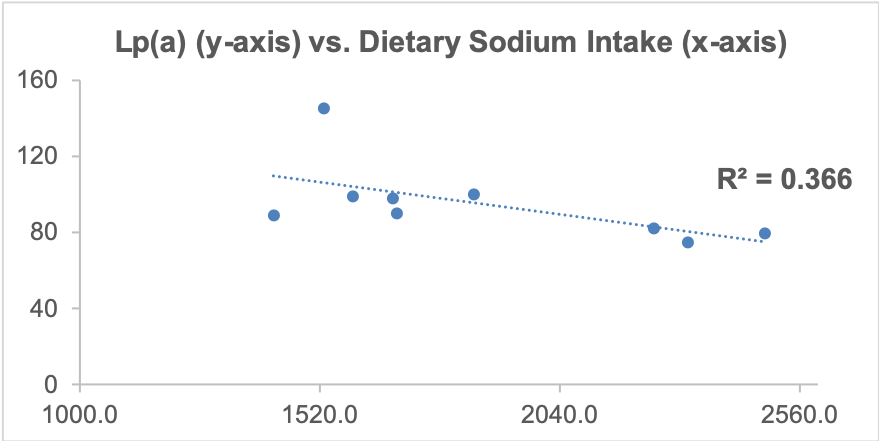
As I’ve mentioned in many blog posts, I’ve been weighing, logging, and tracking my nutrient intake since 2015. When I blood test, I can use the average dietary intake that corresponds to the blood test result, and with enough blood test results, I can look at correlations between my diet with blood test variables. Based on this approach, one possibility is my daily sodium intake. Shown below is a moderately strong correlation (r = 0.61, R^2 = 0.366) between my daily sodium intake with Lp(a). The higher my sodium intake, the lower my Lp(a) values.
lpa vs na.png

Can the strength of this approach be improved? Interestingly, I identified another moderately strong correlation (r = 0.69) between my lycopene intake with Lp(a): the higher my lycopene intake, the higher my Lp(a)! I then decided to include both sodium and lycopene in a linear regression model, and the correlation for both of these nutrients with Lp(a) is 0.90! So what will I do with this info?

The highest that my average dietary sodium intake has been in any blood testing period is ~2500 mg. Sodium levels higher than that seem to negatively affect my sleep, so I’m not interested in going higher than 2500 mg/day. Also, there may be a plateau effect for sodium, as values ~2500 mg/day didn’t associate with significantly lower Lp(a) values when compared with 2300 mg/day. I can, in contrast, reduce my lycopene intake, which comes almost exclusively from my daily watermelon intake. I usually eat ~7 oz/day, and for my next blood test I’ll reduce this to 5 oz/day. Based on the regression equation that includes sodium and lycopene, with a 2300 mg sodium intake and the amount of lycopene that corresponds to 5 oz. of daily watermelon (~6700 micrograms, down from ~9000 micrograms), I should expect to see a Lp(a) value ~67 nmol/L on my next blood test. If not, I’ll repeat this approach, looking for strong correlations between my diet with Lp(a), followed by tweaking my diet to obtain biomarker results that are close to optimal. Stay tuned my my next blood test data, coming in about 2 weeks!

If you’re interested, please have a look at my book!


References

Clarke, R., J. F. Peden, J. C. Hopewell, T. Kyriakou, A. Goel, S. C. Heath, S. Parish, S. Barlera, M. G. Franzosi, S. Rust, et al. 2009. Genetic variants associated with Lp(a) lipoprotein level and coronary disease. N. Engl. J. Med. 361: 2518–2528.

Erqou, S., S. Kaptoge, P. L. Perry, A. E. Di, A. Thompson, I. R. White, S. M. Marcovina, R. Collins, S. G. Thompson, and J. Danesh. 2009. Lipoprotein(a) concentration and the risk of coronary heart disease, stroke, and nonvascular mortality. JAMA. 302: 412–423.

Langsted A, Kamstrup PR, Nordestgaard BG. High lipoprotein(a) and high risk of mortalityEur Heart J. 2019 Jan 4. [Epub ahead of print].

Sawabe M, Tanaka N, Mieno MN, Ishikawa S, Kayaba K, Nakahara K, Matsushita S; JMS Cohort Study Group. Low Lipoprotein(a) Concentration Is Associated with Cancer and All-Cause Deaths: A Population-Based Cohort Study (The JMS Cohort Study). PLoS One. 2012; 7(4): e31954. PLoS One. 2012;7(4):e31954.

Nordestgaard BG, Chapman MJ, Ray K, Borén J, Andreotti F, Watts GF, Ginsberg H, Amarenco P, Catapano A, Descamps OS, Fisher E, Kovanen PT, Kuivenhoven JA, Lesnik P, Masana L, Reiner Z, Taskinen MR, Tokgözoglu L, Tybjærg-Hansen A; European Atherosclerosis Society Consensus Panel. Lipoprotein(a) as a cardiovascular risk factor: current status. Eur Heart J. 2010 Dec;31(23):2844-53.
PRAL, Mortality Risk, and Lifespan

Within the body, meat, grains, and nuts are generally acid-forming, whereas vegetables and fruits are alkaline-forming. Is the distinction between whether your diet is acid- or alkaline-forming important for optimal health and lifespan? In an earlier post, I discussed the importance of PRAL (potential renal acid load) by correlating it with serum bicarbonate and mortality risk (https://michaellustgarten.wordpress.com/2016/02/07/using-diet-to-optimize-circulating-biomarkers-serum-bicarbonate/).

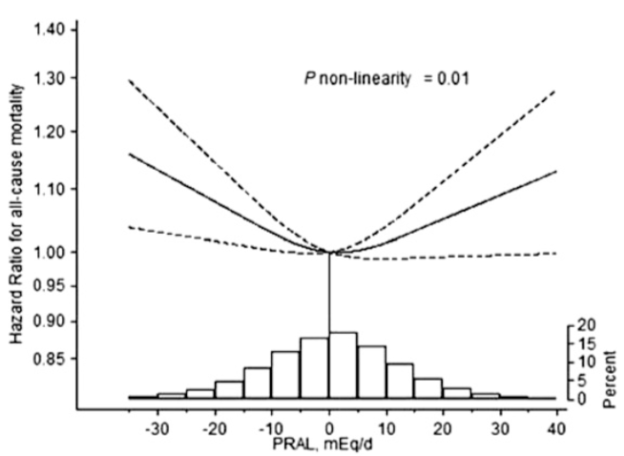
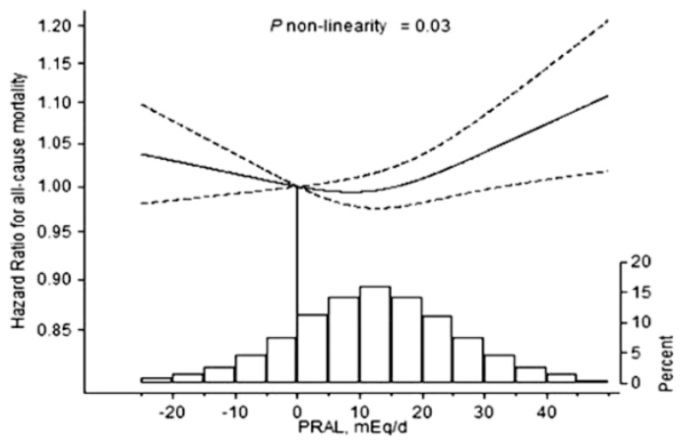
More recent data (a 15-year study of 81, 697 older adults; average age ~61y; Xu et al. 2016) has examined the association between PRAL with risk of death from all causes. In women, acidic PRAL values ( > 0) were associated with a significantly increased risk of death from all causes, as were alkaline PRAL values (< -5.6). In addition, very acidic (~40) and very alkaline (-30) PRAL values were associated with the highest risk for all-cause mortality:

pral-acm-men

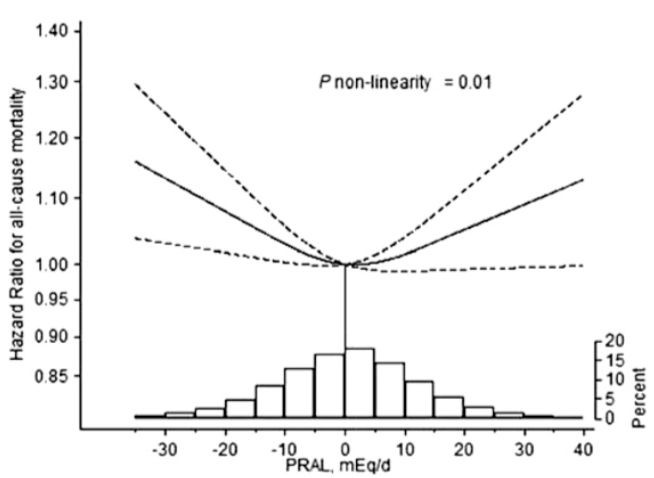
Similarly, in men, when compared with a PRAL = 0, both alkaline (PRAl < -5.6) and acidic (> 29.8) values were associated with increased all-cause mortality risk.

pral-acm-women

While this data suggests that eating too much meat, grains, and/or nuts may not be optimal for health, it also suggests that eating too much alkaline-forming food, including veggies and fruits, may also not be optimal! My high veggie-based diet yields a very negative PRAL, ~-120 (~ -0.05 PRAL units/calorie), which would seem to put me at increased all-cause mortality risk. To further investigate, I decided to look at the PRAL values of long-lived societies.

The PRAL formula, as reported by Remer and Manz (1994) is:

PRAL = (0.49 * protein intake in g/day) + (0.037 * phosphorus intake in mg/day) – (0.02 * potassium intake in mg/day) – (0.013 * calcium intake in mg/day) – (0.027 * magnesium intake in mg/day).

Life expectancy for Seventh-Day Adventist women is 85 years, a value that is the highest in the world (Fraser and Shavlik 2001). What’s the average daily PRAL value for that population?

  • Average daily dietary data in both vegetarian and non-vegetarian Seventh-Day Adventist women (average age, ~72y) has been reported (Nieman et al. 1989). For vegetarians, total calories = 1452; protein = 47g; phosphosphorus = 889 mg; potassium = 2628 mg; calcium = 628 mg; magnesium = 283 mg. These values yield an alkaline PRAL = -33.2. Because higher amounts of these nutrients can result from an increased calorie intake, it’s important to divide PRAL by the average daily calorie value, thereby yielding  PRAL/calorie. For vegetarian Adventists, this value = -0.02.
  • In non-vegetarian Adventists, total calories = 1363; protein = 55g; phosphosphorus = 892 mg; potassium = 2342 mg; calcium = 633 mg; magnesium = 228 mg. These values also yield an alkaline PRAL = -25.5, and PRAL/calorie = -0.019.

Life expectancy for those who live on the island of Okinawa is among the longest in the world (Miyagi et al. 2003). What’s the average daily PRAL value for Okinawan older adults?

  • The average daily dietary data for 75-year old Okinawans  has been reported (Willcok et al. 2007): total calories, 1785; protein, 39g; phosphosphorus, 864 mg; potassium, 5200 mg; calcium, 505 mg; magnesium, 396 mg. These values also yield an  yield a very alkaline PRAL value = -87.4, and PRAL/calorie =  -0.049. Interestingly, these values are very close to my very alkaline PRAL values of -121, and PRAL/calorie = ~-0.05!

My goal is not just to get to 75 in great health, but to live past 100 (and far beyond). What’s the data in centenarians? Unfortunately, I could only find 2 studies that included dietary data for that age group.

  • In a study of 30 Chinese centenarians (average age, 103y), daily dietary values of 1220 calories, 39g protein, 603 mg phosphorus, 1433 mg potassium, 482 mg calcium, and 355 mg magnesium were reported (Cai et al. 2016), thereby yielding an average daily PRAL value = -20.3, and PRAL/calorie = -0.017.
  • Similarly, in a larger study of 104 Japanese centenarians (average age, 100y), daily dietary values of 1137 calories, 44g protein, 676 mg phosphorus, 1695 mg potassium, 414 mg calcium, and 154 mg magnesium were reported (Shimizu et al. 2003), thereby yielding an average daily PRAL value = -16.3, and PRAL/calorie = -0.014.

In contrast to the data of Xu et al. (2016), these data suggest that an alkaline diet may indeed be optimal for lifespan.

So what’s your dietary PRAL value?

If you’re interested, please have a look at my book!

References

Cai D, Zhao S, Li D, Chang F, Tian X, Huang G, Zhu Z, Liu D, Dou X, Li S, Zhao M, Li Q.  Nutrient Intake Is Associated with Longevity Characterization by Metabolites and Element Profiles of Healthy Centenarians. Nutrients. 2016 Sep 19;8(9).

Fraser GE, Shavlik DJ. Ten years of life: Is it a matter of choice? Arch Intern Med. 2001 Jul 9;161(13):1645-52.

Miyagi S, Iwama N, Kawabata T, Hasegawa K. Longevity and diet in Okinawa, Japan: the past, present and future. Asia Pac J Public Health. 2003;15 Suppl:S3-9.

Nieman DC, Underwood BC, Sherman KM, Arabatzis K, Barbosa JC, Johnson M, Shultz TD. Dietary status of Seventh-Day Adventist vegetarian and non-vegetarian elderly women. J Am Diet Assoc. 1989 Dec;89(12):1763-9.

Remer T, Manz F. Estimation of the renal net acid excretion by adults consuming diets containing variable amounts of protein. Am J Clin Nutr. 1994;59:1356-1361.

Shimizu K, Takeda S, Noji H, Hirose N, Ebihara Y, Arai Y, Hamamatsu M, Nakazawa S, Gondo Y, Konishi K. Dietary patterns and further survival in Japanese centenarians. J Nutr Sci Vitaminol (Tokyo). 2003 Apr;49(2):133-8.

Willcox BJ, Willcox DC, Todoriki H, Fujiyoshi A, Yano K, He Q, Curb JD, Suzuki M. Caloric restriction, the traditional Okinawan diet, and healthy aging: the diet of the world’s longest-lived people and its potential impact on morbidity and life span. Ann N Y Acad Sci. 2007 Oct;1114:434-55.

Xu H, Åkesson A, Orsini N, Håkansson N, Wolk A, Carrero JJ. Modest U-Shaped Association between Dietary Acid Load and Risk of All-Cause and Cardiovascular Mortality in Adults. J Nutr. 2016 Aug;146(8):1580-5.